
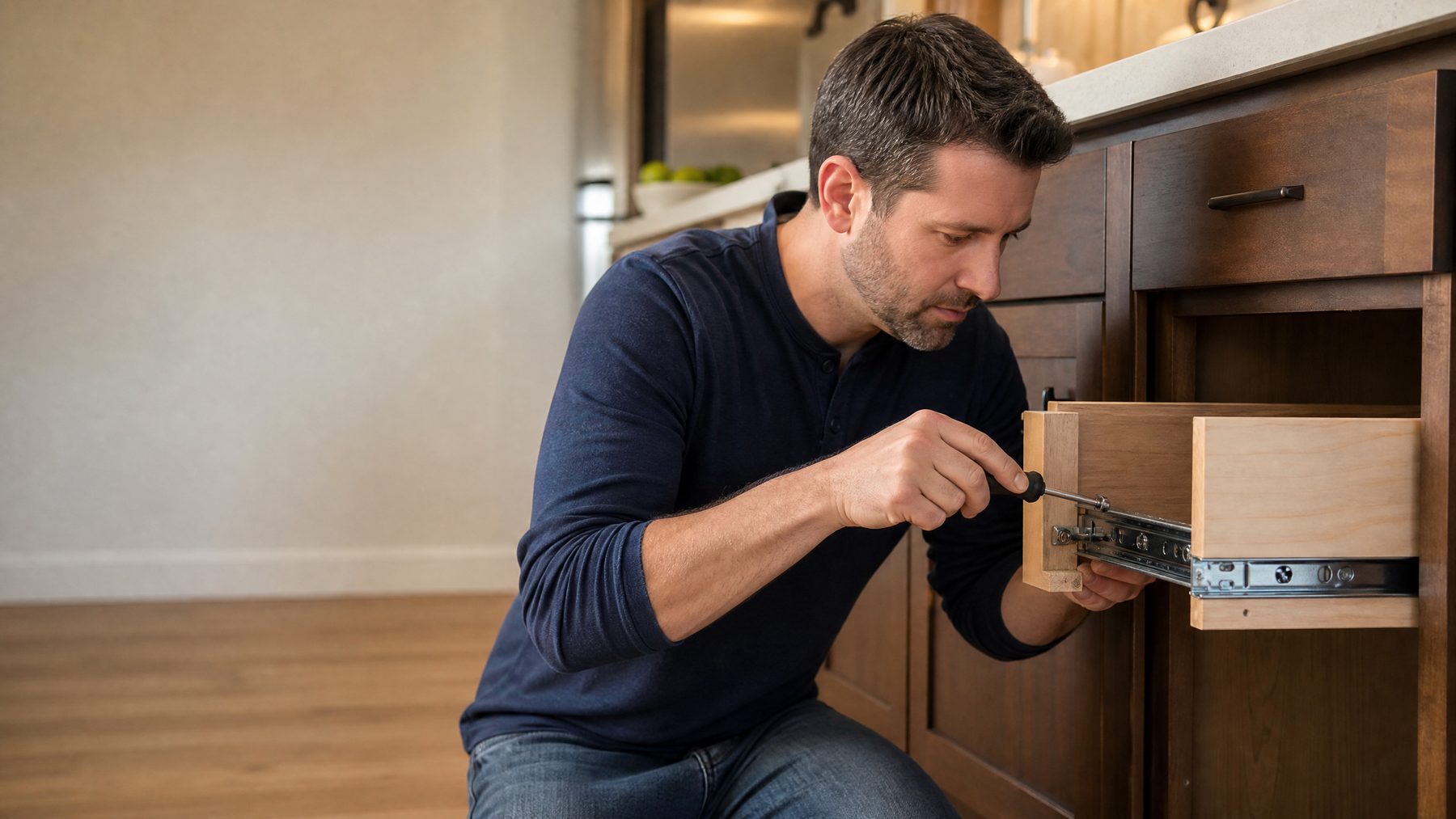
The drawer beside my cooktop once started sticking every time I reached for a spatula. I pulled it out expecting a failed slide and found a cracked wooden skewer and a few crumbs jammed behind the runner. I now start with a flashlight and a cleanout before I buy parts.
The repeat offenders are crumbs, loose screws, a shifted slide, bent hardware, worn bearings, and wood that has swollen near a damp sink. I work through those causes in that order because it keeps a ten-minute cleanup from turning into an unnecessary hardware replacement. If you also work under the sink, use the same check-first habit in our guide to a leaky water filter faucet.
Tools and materials (concise table)
| Tools | Materials |
|---|---|
| Phillips & flat-head screwdrivers, precision set | Silicone-based slide lubricant (spray or gel) |
| Flashlight or phone light | Paste wax or paraffin candle (for wood runners) |
| Small stiff brush, vacuum crevice tool, canned air | Wood glue, wooden toothpicks |
| Sandpaper (120–220 grit) | Replacement slides & screws (if needed) |
| Masking tape & pencil, small adjustable wrench | Rag and rubbing alcohol |
Quick self-check
Use this short scenario table before you start with tools. It tells you which repairs to try first.
| Scenario | Likely cause | Quick action |
|---|---|---|
| Drawer drags only at the start of travel | Front lip or trim rubbing, or drawer face interference | Open slowly, look for contact at front, try easing or sanding the offending edge |
| Drawer sticks mid-travel and squeaks | Debris in metal slide or worn rollers/bearings | Partially open, inspect track with flashlight, clean and test |
| Drawer tight all the way in and out | Swollen wood runners or misaligned slide | Check cabinet for moisture; test fit after waxing or light sanding |
| Drawer falls off when pulled | Release tab or rear stop damaged/not seated | Inspect clips/stops, re-seat or replace damaged plastic/metal parts |
| Smooth empty but sticks when loaded | Overloaded drawer or slides under-rated | Empty drawer and test; reduce load or upgrade slides if needed |
Safety first:
-
Wear gloves and eye protection if you’re scraping, working with solvents, or handling splintered wood.
-
Support the drawer when removing it; heavy cutlery drawers can surprise you when they slide free.
-
Keep fingers clear of slide mechanisms when testing and reinstalling to avoid pinches.
-
If you encounter electrical wiring, plumbing, or a cabinet that looks structurally cracked, stop and get professional help.
How to tell what kind of runner you have
Pull the drawer partially out and look under or along the sides:
-
Ball-bearing or side-mount metal slides: two telescoping metal rails with visible bearings or rollers and often a plastic release lever at the front.
-
Undermount slides: mounted under the drawer box, usually hidden and often include soft-close cams or plastic clips to release the drawer.
-
Wood-on-wood runners: simple wooden strips inside the cabinet and along the drawer sides or bottom; friction and swelling are the main problems.
If you can’t remove the drawer yet, shine a flashlight down the side to confirm whether you see metal rails, an undermount profile, or wooden runners.
Common causes by runner type, and what to try first
-
Metal side-mount slides: crumbs and dried food, loose screws, misalignment, bent rails, or worn ball bearings. Clean and dry first; lubricate sparingly with a silicone slide lubricant—avoid WD-40 or petroleum oils that attract dust [1].
-
Undermount slides: clogged cams, broken plastic clips, worn glide pads, or internal mechanism damage. Removal and service vary by model—check the manufacturer instructions if you can identify the slide.
-
Wood-on-wood runners: humidity-driven swelling, finish wear, or uneven surfaces. Sanding and wax/paraffin are typical remedies.
Numbered step-by-step procedure (diagnose and fix most sticky drawers)
-
Empty the drawer. Remove all contents so you can test empty and avoid surprises while handling the drawer.
-
Observe and feel. Open and close slowly. Note where the resistance begins and whether the issue is constant or load-dependent.
-
Identify the runner type (side-mount, undermount, wood-on-wood). Use a flashlight to confirm.
-
Try the non-invasive fixes first: clean visible debris, tighten accessible screws, and test empty movement.
-
Remove the drawer if needed, following the release method for your slide type; don’t force removal—look for hidden screws or clips [1].
-
Clean tracks and bearing areas with a small brush, vacuum, and rubbing alcohol; dry completely before lubricating.
-
Make small alignment adjustments by loosening slide screws slightly, shifting the rail, and retightening—test after each small change [2].
-
Lubricate metal slides sparingly with silicone-based lube; use paste wax or paraffin for wood-on-wood runners. Wipe away excess.
-
Inspect for bent rails, cracked retainers, or broken clips; replace slides or clips if parts are damaged or balls/rollers are missing.
-
Reinstall the drawer and test with a normal load. If it still binds, re-evaluate for structural damage, stripped holes, or moist cabinet wood.
Step-by-step fixes for metal-slide drawers
-
Empty the drawer.
-
Pull the drawer nearly out and look for release levers or tabs. Different models disengage differently—some have plastic levers to press, others lift and remove. If removal attempts feel forced, check for hidden screws on the drawer underside or at the cabinet back.
-
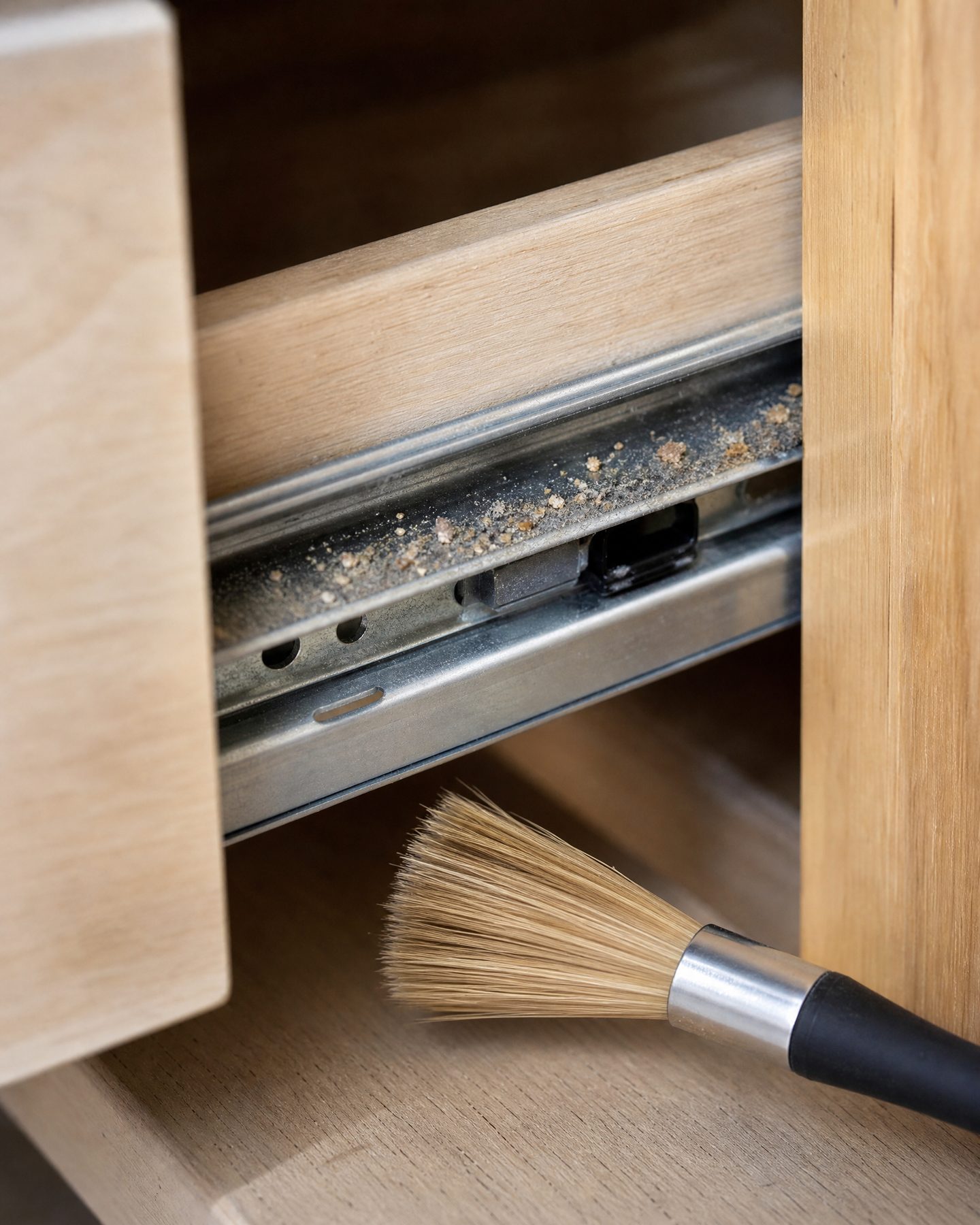
Clean tracks and rollers. Use a brush and vacuum crevice tool or canned air to remove crumbs and dust. For sticky residues, wipe the metal parts with a rag dampened with rubbing alcohol and let dry.
-
Inspect and tighten screws. Look for missing or rusted screws and tighten all mounting screws on both cabinet and drawer sides.
-
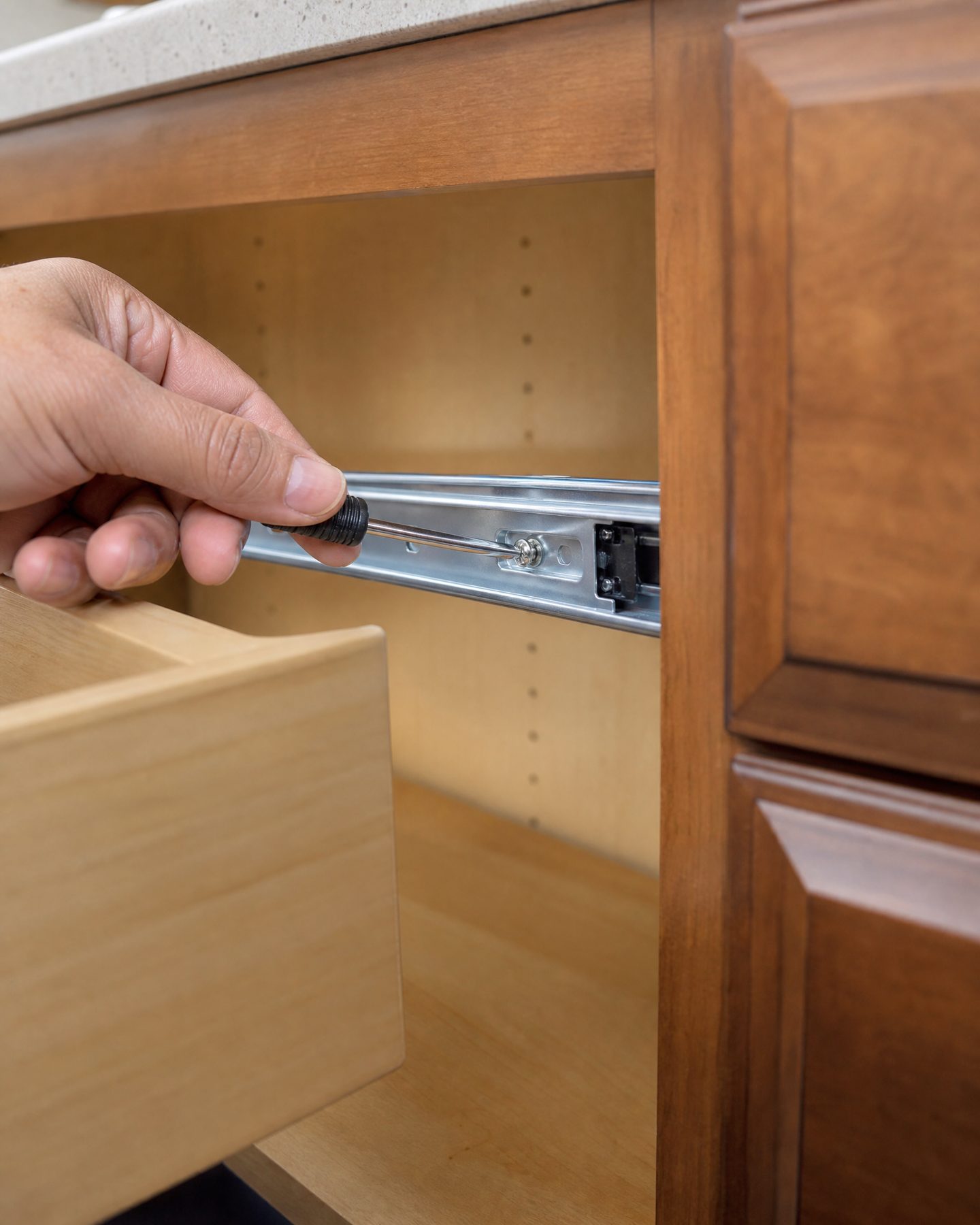
Adjust alignment. Loosen slide screws a quarter turn, nudge the slide slightly left/right or up/down, then tighten and test. Mark original positions with masking tape and a pencil so you can reverse if needed.
-
Lubricate sparingly. Apply silicone slide lubricant to ball tracks and moving surfaces; wipe excess. Do not use WD-40 or household oils that attract grime.
-
Replace damaged parts. Bent rails and pitted bearings typically mean replacement slides. Replace both slides at once to keep travel even and balanced.
-
Reinstall and test with a normal load.
Fixing stripped screw holes and damaged mounting points
Stripped holes are a common cause of wobble and misalignment:
-
Remove the screw and clean out debris.
-
Coat one or two wooden toothpicks with wood glue, press them into the stripped hole, and snap them flush when the glue sets.
-
Let glue cure per the adhesive instructions, then reinsert the screw and tighten gently.
-
For a stronger repair, use epoxy wood filler, or install a slightly larger screw. If the cabinet box end-grain is split or many holes are stripped, the repair may need a small wood splice or professional attention.
Fixing misaligned slides without removing them entirely
-
Partially open the drawer and loosen the cabinet-side slide screws by a quarter to half turn.
-
Slide the rail slightly until the drawer runs freely; mark the new position and tighten screws.
-
If the drag is at a specific point, adjust the screw(s) nearest that zone first and finish by tightening all mounting screws evenly.
When bearings or rollers are worn
Signs of wear: grinding noises, uneven rolling, or wobble.
-
If cleaning and lubrication don’t restore smooth travel, look for pitted, flattened, or missing ball bearings. Damaged balls or retainers usually mean the slide needs replacement.
-
Measure the slide length from the front mounting face to the back end and buy matching replacement slides with similar length and weight rating. Replacing both sides keeps motion balanced.
Step-by-step fixes for wood-on-wood runners
-
Empty the drawer and remove it so you can access the runners.
-
Clean the two surfaces with a dry brush or vacuum; dirt and dried food act like sandpaper.
-
Run your finger along each runner looking for high spots or roughness.
-
Sand high spots lightly with 120–220 grit sandpaper, removing tiny amounts at a time.
-
Apply a thin coat of paste wax or rub a paraffin candle along the mating surfaces; buff off excess.
-
Reassemble and test. If binding persists, check for ongoing moisture issues and consider a dehumidifier in persistently damp kitchens.
If a wood runner is badly chewed or rotted, you may need to glue and clamp a new hardwood strip or have a carpenter fit a replacement. Ensure mating surfaces are parallel and true; shims and precise measurement matter.
Minor front-face binding and trim issues
If the drawer rubs the cabinet face or trim, try these targeted fixes:
-
Check and tighten face screws from behind the drawer front.
-
If the drawer front has swollen, remove it and sand or plane a small amount from the edges until it clears. Work in small steps and check fit often.
-
If molding or trim is the problem, lightly round the molding’s contact edge with sandpaper or undercut paint glazing with a utility knife to stop the rub.
Troubleshooting table (symptom → likely cause → quick fix)
| Symptom | Likely cause | Quick fix |
|---|---|---|
| Sticks only when closed and first opened | Front lip or trim interference | Check and sand the front or trim; tighten face screws |
| Drags mid-travel | Debris inside metal slide or worn bearings | Clean track, apply silicone lube, inspect bearings |
| Loose and wobbles | Stripped mounting screws or worn slide | Repair hole with toothpicks + glue or replace slide |
| Falls off track or comes out too easily | Release tabs broken or rear stops missing | Inspect and replace clips/stops or realign captures |
| Smooth empty but not when loaded | Overloaded drawer or slides not rated for weight | Reduce load or upgrade to higher weight-rated slides |
Why not to use household oils or WD-40 on slides Aerosol penetrants like WD-40 can free stuck parts temporarily but leave an oily residue that attracts dust and grime, turning a clean track into an abrasive mess.
Silicone-based slide lubricants are dry- or semi-dry-film products that don’t attract the same amount of dust and are the recommended choice for metal slides. Save paste wax or paraffin for wood-on-wood contact only. For broader appliance-care pitfalls, see common mistakes that ruin home gadgets.
Replacing slides: what to expect and how to measure
-
Remove the drawer and unscrew old rails from both drawer and cabinet.
-
Measure slide length from the front mounting face (where the slide meets the drawer face) to the back end. Note slide type (side-mount, undermount, center-mount) and whether you want full-extension or partial-extension.
-
Match the weight rating to your regular load: light, medium, or heavy-duty.
-
Install new slides, using original screw holes when possible. Repair any stripped holes before mounting.
-
Test alignment and smooth operation. If the cabinet face must be removed or routed to convert runner types, that becomes a more advanced job and may need a pro.
If the cabinet box is damaged or the face must be modified to accept a different style of slide, consult a professional cabinetmaker or handyman. New undermount slides can look cleaner and reduce visible maintenance but may cost more and sometimes require cabinet-face modification.
Long-term care and simple habits that prevent stickiness
-
Clean crumbs from high-use drawers monthly. A quick brush and vacuum go a long way.
-
Avoid overloading drawers. Check slide weight ratings when storing heavy items like pans.
-
Periodically retighten visible screws—an annual check can prevent misalignment problems.
-
Keep kitchen humidity moderate; prolonged dampness can cause wood-on-wood runners to swell.
-
Photograph slide and screw positions before removal so reassembly is straightforward.
When to stop and call for help
Call a pro when:
-
The cabinet box shows structural damage (large cracks, joint separation, or collapse).
-
You find rot or active pest damage undermining screw mounts.
-
Replacement requires cabinet-face removal, routing, or carpentry beyond your comfort level.
-
The drawer is adjacent to electrical or plumbing components you might disturb. If replacement slides are needed but the cabinet face or box is damaged, a cabinetmaker or handyman can splice reinforcements and install robust new slides.
Final troubleshooting checklist before you give up
-
Cleaned and dried tracks? Yes/No.
-
Tightened all visible screws? Yes/No.
-
Tried small realignment by loosening slide screws? Yes/No.
-
Applied silicone lubricant to metal slides or wax to wood runners? Yes/No.
-
Inspected for bent rails, missing balls, or cracked retainers? Yes/No.
If you answered “No” to any of the first four, try those fixes before replacing hardware. If you answered “Yes” and the drawer still binds, the problem may be worn hardware or damaged cabinet structure that needs a pro.
Shopping checklist for replacement parts
-
Slide type (side-mount, undermount, center-mount) and length.
-
Weight rating and extension type (full vs three-quarter vs partial).
-
Soft-close vs standard action.
-
Proper screws: keep originals and replace rusted or stripped screws with the correct length and head type.
-
Mounting brackets or retrofit kits if converting runner types.
I usually start with the quick checks—cleaning and tightening—because they solve the majority of sticky-drawer problems. When slides are bent or bearings are visibly damaged, replacing both slides with matched parts typically restores smooth operation. If the cabinet itself is compromised, a carpenter is the sensible next call rather than forcing band-aid fixes.
Leave a Reply