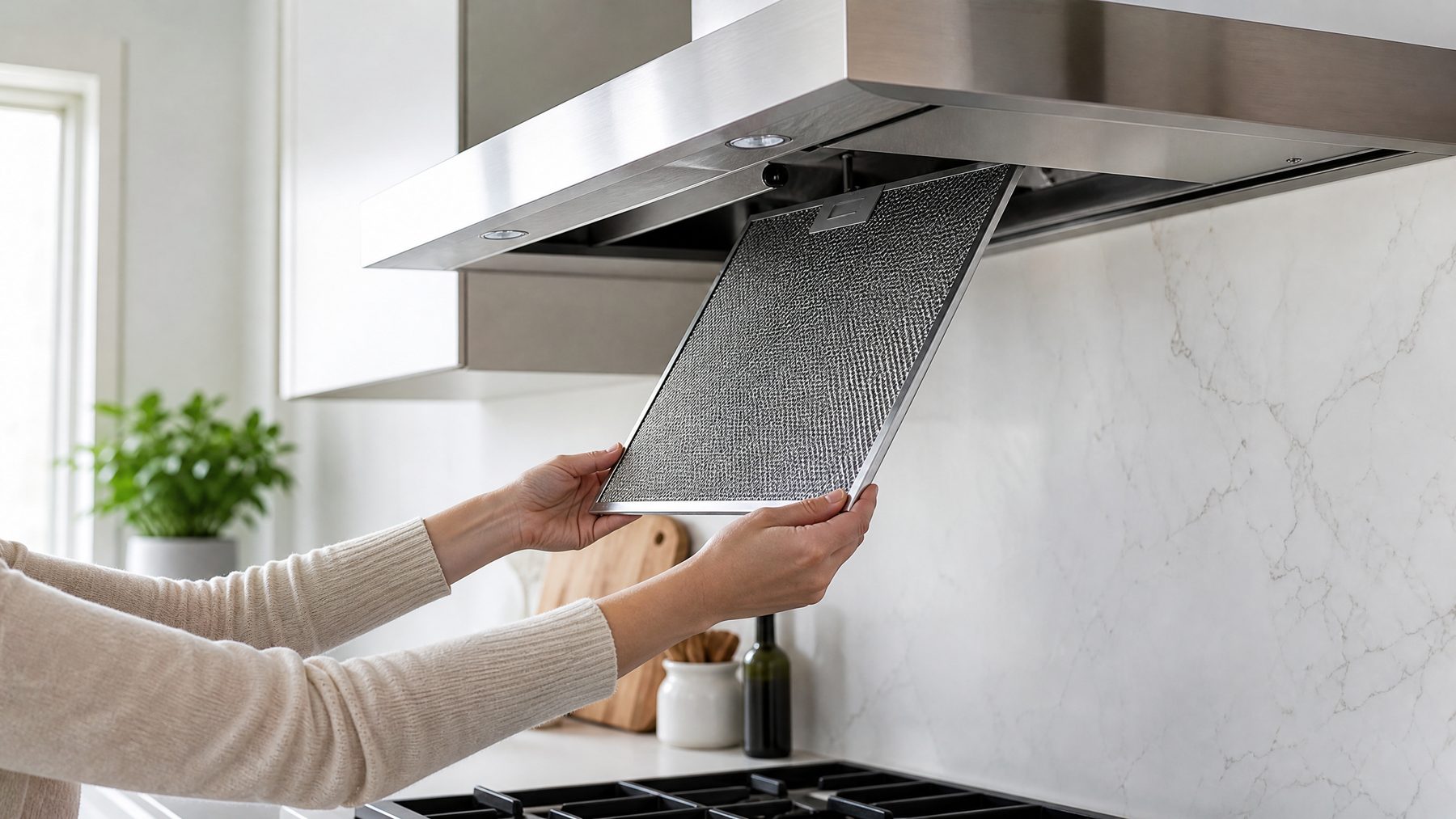
A range hood filter does more than catch grease: it protects ductwork, helps airflow, and keeps cooking smells from settling into your kitchen. I keep this simple: identify the filter type, watch for clear signs of trouble (sticky grease, weak airflow, or lingering odors), and follow a safe cleaning or replacement routine so the hood keeps doing its job. If your next maintenance job is below the sink, see our guide to a clean dishwasher filter.
I have cleaned enough greasy metal filters to know that the smell often returns when the mesh looks clean but the frame is still tacky. I’ll show you how I check the filter type, wash a metal filter, handle a charcoal cartridge, and test airflow. For broader appliance-care context, see common mistakes that ruin home gadgets.
Why filter type matters
-
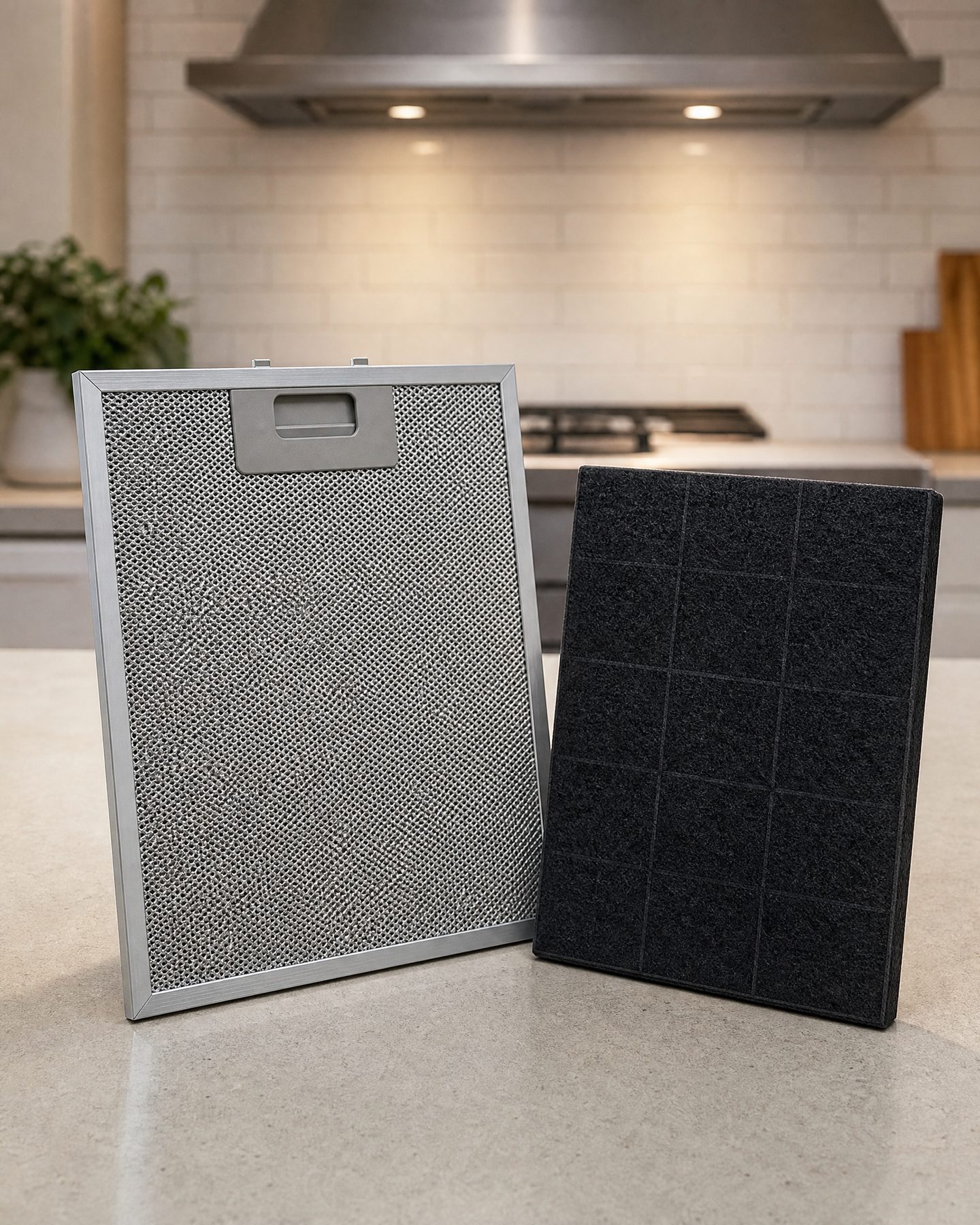
Metal grease filters (mesh, aluminum, or baffle) are reusable and designed to be cleaned. They trap grease droplets and larger particles and can be restored with soaking and gentle scrubbing.
-
Charcoal (activated carbon) filters, used in ductless recirculating hoods, are replaceable and should not be washed; washing damages the carbon’s porous structure and reduces odor-capturing performance. [2]
Knowing which one you have is the first step. Washing a charcoal cartridge reduces its effectiveness and can introduce moisture and trapped grease into the unit. If you’re unsure, the owner’s manual or the model label will usually specify the filter type and any model-specific instructions.
Tools and materials (concise table)
| Tool / Material | Purpose |
|---|---|
| Dish soap or degreasing detergent | Soak and clean metal filters |
| Large sink or tub | Soak metal filters in hot water |
| Soft-bristled brush / non-abrasive pad | Lift grease without damaging metal |
| Rubber gloves | Protect hands from hot water and degreaser |
| Old towels or drying rack | Fully dry filters before reinstalling |
| Replacement charcoal filters (as needed) | Swap saturated carbon cartridges |
| Flashlight | Inspect inside hood, fan, and duct access |
| Step stool | Reach the hood safely |
Safety first: Always switch the hood off and allow it to cool before removing filters. If you can, disconnect power at the switch or breaker when you’re working inside the unit. Avoid working on a powered or hot hood. Use gloves to protect skin from hot water and grease, and be cautious when using step stools.
How to identify your filter type
-
Turn off and, if possible, disconnect power to the hood.
-
Remove the filter: most models slide or latch out; consult the manual if needed. Hold filters level to avoid drips.
-
Inspect the material: metal filters show mesh, slats, or baffle panels and are metallic in color; charcoal cartridges are dark, fibrous, and porous to the touch.
-
Confirm with the model label or owner’s manual if you’re still unsure — manuals state whether charcoal filters are replaceable and whether metal filters are dishwasher-safe. [2]
When you find a metal filter, plan to clean it. If you find a charcoal cartridge, plan to replace it on the schedule the manufacturer recommends.
How often to clean or replace
Manufacturer guidance varies by model and use. As practical windows:
-
Clean metal grease filters every 3–6 months under typical home use; if you fry often, clean more frequently. [2]
-
Replace charcoal filters roughly every six months for ductless systems; heavy use may require replacement sooner. [2]
-
GE’s cleaning guidance points to soaking in hot water with detergent, light brushing, and thorough drying; with proper care metal filters can last for years.
These are guidelines. Adjust frequency to match how often and how intensely you cook.
Quick self-check
Use this short scenario table to decide the next step.
| Scenario | What it likely means | What to do next |
|---|---|---|
| The hood smells of fried food hours after cooking | Saturated charcoal in ductless hoods or grease trapped in ducts | Replace charcoal cartridge if ductless; clean metal filter and inspect ducting if ducted |
| Fan is louder and struggles to pull smoke | Grease on fan or a stressed motor | Clean metal filter, inspect fan area; call a pro if motor noise continues |
| Metal filter is dark brown after soaking | Heavy saturation, possible corrosion, or damage | Try another clean cycle; if staining, warping, or holes remain, replace the filter |
| Filter-change indicator is lit | Scheduled maintenance required | Follow the manual to clean or replace and reset the indicator |
Cleaning metal grease filters — numbered step-by-step procedure
When I clean a clogged metal filter, I follow a methodical routine so I don’t damage parts or leave dampness that can cause drips or mildew.
-
Power and cool down: Turn the hood off and, if reasonable, disconnect power at the panel. Wait until the hood and cooktop are cool.
-
Remove the filter: Most filters release with a latch or slide. Keep the filter level to avoid dripping grease. Place an old towel beneath the work area.
-
Pre-rinse: Rinse the filter under hot tap water to loosen surface grease. This short step reduces time in the soak and removes loose grime.
-
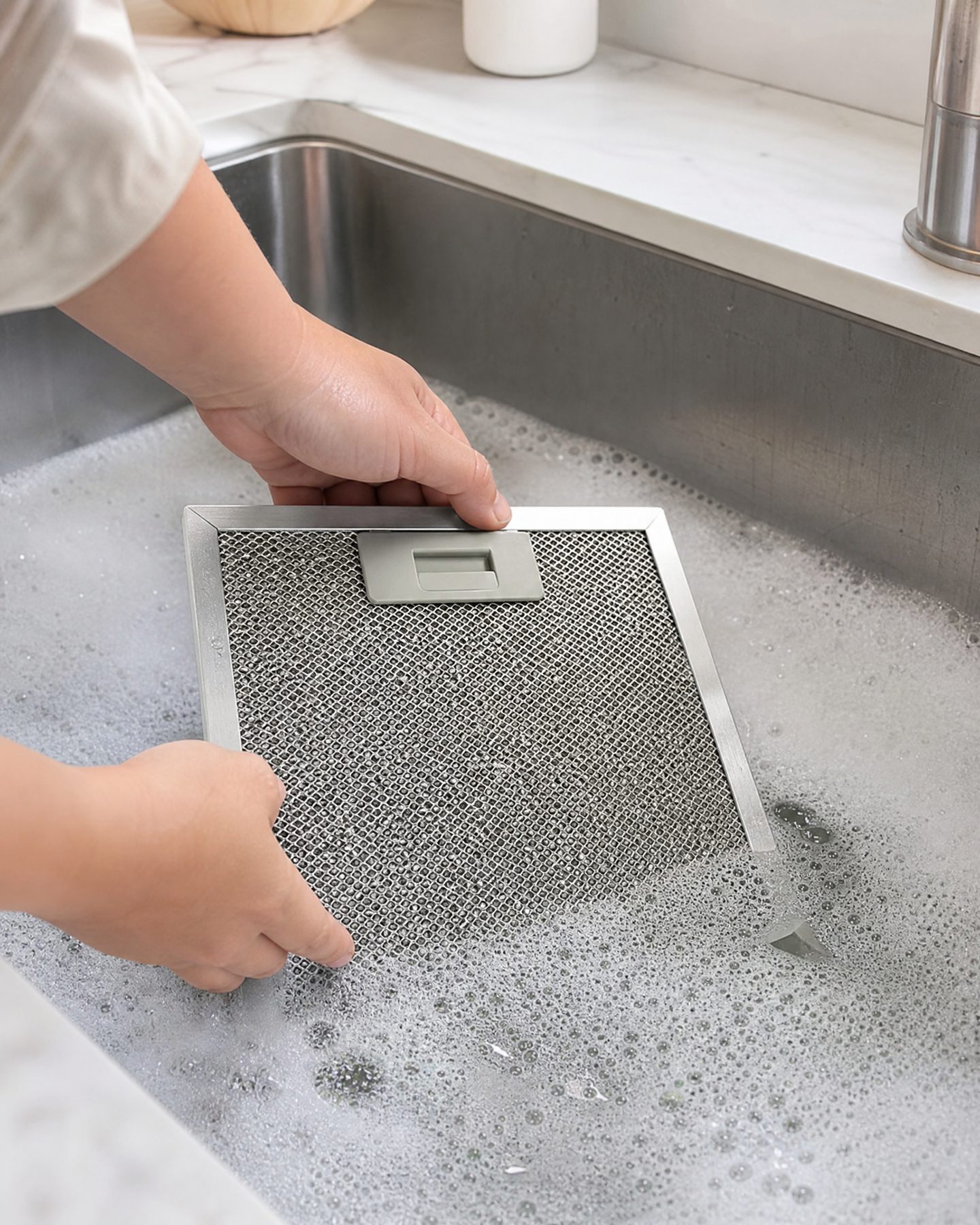
Prepare the soak: Fill a large sink or tub with the hottest water you can safely handle. Add a degreasing dish soap (or a small amount of laundry detergent). For very heavy grease, add a tablespoon of baking soda to help break down oils, but test on a small area first if you’re unsure about finishes.
-
Soak time: Submerge the filter completely and soak for 10–30 minutes depending on buildup. Heavily saturated filters may need a longer soak or a second round. Do not use boiling water on filters with plastic frames or coatings; consult the manual.
-
Gentle scrubbing: Use a soft-bristled brush, nylon scrub pad, or toothbrush to lift remaining grease. Work along the grain of baffles or mesh so you don’t bend fins or distort mesh. Avoid steel wool or metal scouring pads.
-
Rinse thoroughly: Rinse with hot water until the runoff is clear. A final clear rinse is a good indicator the grease is gone. A hose or sink sprayer speeds this step.
-
Dry completely: Place filters on a drying rack or towels and allow full air-drying before reinstalling. A slightly damp filter can cause grease to drip and may encourage mildew. GE recommends drying completely and avoiding ammonia-based cleaners.
-
Reinstall and test: Refit the filter per the manual, restore power, and run the hood to verify noise and airflow have returned to normal.
Tips and alternatives
-
Commercial degreasers can help for stubborn oil—follow product directions and rinse thoroughly.
-
Dishwasher caution: Some baffle filters are marked dishwasher-safe, but detergent and high heat can dull or warp finishes; if the manual allows it, use the top rack and a low-heat setting, then air-dry. Hand washing is safer when the manual is missing.
-
Avoid oven cleaners and harsh chemicals; they can damage finishes and create fumes.
Replacing charcoal (activated carbon) filters
Charcoal filters remove odors in ductless hoods and cannot be restored by washing; washing degrades the carbon’s adsorption properties. Replace them according to manufacturer guidance or sooner if odors return quickly.
Basic replacement steps
-
Turn off and cool: Allow the hood to cool and turn power off.
-
Remove the metal grease filter first (if present) to access the charcoal cartridge.
-
Remove cartridge: Carbon filters typically twist, snap, or slide out; note orientation and indexing tabs.
-
Buy the correct replacement: Use the part number from the manual or model label, or check the manufacturer’s website for compatible parts. Generic fits may not seat or seal correctly.
-
Install new cartridge: Fit in the same orientation and make sure clips or tabs engage fully. Reinstall the grease filter and restore power.
Broan-NuTone suggests replacing charcoal cartridges about every six months under typical use and sooner for frequent frying or heavy cooking. Keeping a spare on hand avoids lapses in odor control.
Signs a filter is beyond cleaning and needs replacement
-
Metal filter has holes, tears, severe warping, or bent sections that won’t re-seat.
-
Metal filter shows corrosion or rust that flakes and won’t come off with cleaning.
-
Charcoal filters have persistent odors even after replacing grease filters.
-
Airflow remains weak after cleaning metal filters and checking fan and duct access.
-
The hood’s filter-change indicator signals replacement is due.
Practical checks for airflow and fan performance
These quick checks don’t require special tools:
-
Tissue test: Hold a small tissue or light paper under the hood while the fan runs on high. The tissue should flutter and be pulled in. Barely moving tissue indicates reduced airflow.
-
Candle or incense test: Place an incense stick or a small candle near a pot and observe whether smoke is drawn up into the hood. Lingering smoke means reduced capture.
-
Speed comparison: Run the hood on low and then high to see how quickly steam clears. If high speed takes a long time, the hood may be overloaded or the filter is clogged.
-
Listen: Increased grinding or scraping often indicates grease on the fan, a misaligned blade, or motor problems.
If cleaning filters doesn’t restore normal airflow, the problem could be deeper in the ductwork, the damper, or the blower motor.
Troubleshooting table
| Problem | Likely cause | First-line fix |
|---|---|---|
| Filter looks greasy but airflow is normal | Surface grease | Clean metal filter; wipe hood interior |
| Weak airflow after cleaning | Damaged filter, blocked duct, failing fan | Check filter for holes; inspect duct and damper; test fan |
| Persistent odors after cleaning | Saturated charcoal or grease trapped in unit | Replace charcoal cartridge; clean interior of hood |
| Fan louder than usual | Grease on motor/fan, loose blade, motor strain | Turn off power; inspect fan; tighten mountings; call technician if motor noisy |
| Filter-change indicator lit | Maintenance interval reached | Clean or replace per manual; reset indicator if required |
When to stop and call for help
When to stop and call for help
-
You hear grinding, scraping, or sudden rattling from the fan motor.
-
The hood repeatedly trips circuit breakers or you see electrical arcing.
-
After cleaning and replacing filters, airflow or noise problems persist.
-
You smell burning or see smoke originating from the hood’s motor area.
If any of these occur, stop using the hood and contact a qualified appliance technician. Internal electrical components and motors are not safe to service without proper tools and training.
Prolonging filter life with everyday habits
-
Use the correct fan speed: Run the hood on higher settings during frying or long browning to catch grease before it spreads.
-
Control splatter: Use lids, splatter screens, and moderate heat to reduce airborne grease.
-
Wipe surfaces regularly: A quick wipe of the hood interior and exterior after heavy cooking stops grease from migrating back onto filters.
-
Keep drip cups emptied: Empty oil-collection trays or drip cups so grease doesn’t re-circulate.
-
Vent after cooking: Run the hood for 10–15 minutes after a heavy cook to clear residual particulates and vapors.
Disposal and recycling of old filters
-
Charcoal filters are typically household trash unless local rules specify otherwise; check local disposal guidance.
-
Metal filters are often recyclable as scrap metal — remove non-metal attachments (plastic frames) if your recycler requests it. Follow local recycling programs.
Notes on ducts, vents, and stubborn grease If the filter is clean but airflow is still weak, grease can collect in ducts, at dampers, or in the exterior vent cap. Inspect what you can see with a flashlight.
If you find heavy grease deeper in ducts, hire a duct-cleaning professional: grease-laden ducts pose a fire risk and often require specialized equipment. Also check the exterior vent cap for obstructions like leaves or bird nests and for a sticking damper that may allow backdrafts.
Strong chemicals and stubborn stains
For persistent grease, repeat soaking and gentle brushing rather than turning to harsh chemicals. GE specifically advises against ammonia-based cleaners and recommends soaking in hot water with detergent and light brushing. Strong cleaners can damage finishes and create harmful fumes. If staining or damage won’t come out, replacing the filter is a reasonable choice.
Record-keeping and a realistic schedule
Keep a simple maintenance note on a calendar or phone reminder: log when you clean metal filters and when you replace charcoal cartridges. A realistic schedule:
-
Quick visual check after heavy cooking: as needed (1–3 months).
-
Clean metal filters: every 3–6 months under typical use; more often for frequent frying.
-
Replace charcoal cartridges: about every six months under typical use; sooner for heavy cooking.
-
Replace metal filters only if warped, corroded, or damaged beyond cleaning.
If cleaning doesn’t fix the problem
If you’ve carefully cleaned metal filters and replaced charcoal filters per the manufacturer, but problems persist:
-
Inspect the vent path and exterior cap for blockages.
-
If ducts are clogged or the damper is stuck, hire a duct cleaner or HVAC technician.
-
If ducts are clear and the hood still underperforms, the blower motor or fan assembly may be failing — arrange for a qualified technician.
-
If parts are unobtainable for an older hood or repairs exceed the hood’s value, consider replacement.
Final practical tips for busy cooks
-
Run the hood for 10–15 minutes after heavy cooking to clear lingering grease and odors; this reduces filter saturation.
-
Keep a replacement charcoal filter on hand if you use a ductless hood heavily — a quick swap restores odor control immediately.
-
If you’re unsure how the filters latch, ask a technician or helpful friend to show you once; after that, routine removal and cleaning is usually quick.
-
Use a small notebook or smartphone reminder to track cleaning and replacement dates so you don’t rely on memory alone.
A tidy routine of inspection, cleaning, and timely replacement keeps the hood doing its job: trapping grease, moving air efficiently, and reducing odors. Follow model-specific instructions in your owner’s manual for any special care or limits on dishwasher use, and replace parts when damage or saturation outstrips cleaning.
References
-
GE Appliances, Vent Hood—Cleaning Metal Grease Filters: https://products.geappliances.com/appliance/gea-support-search-content?contentId=16685
-
Broan-NuTone, Range Hood Filter Guide: https://www.broan-nutone.com/en-us/home/learn/filter-replacement
Leave a Reply