
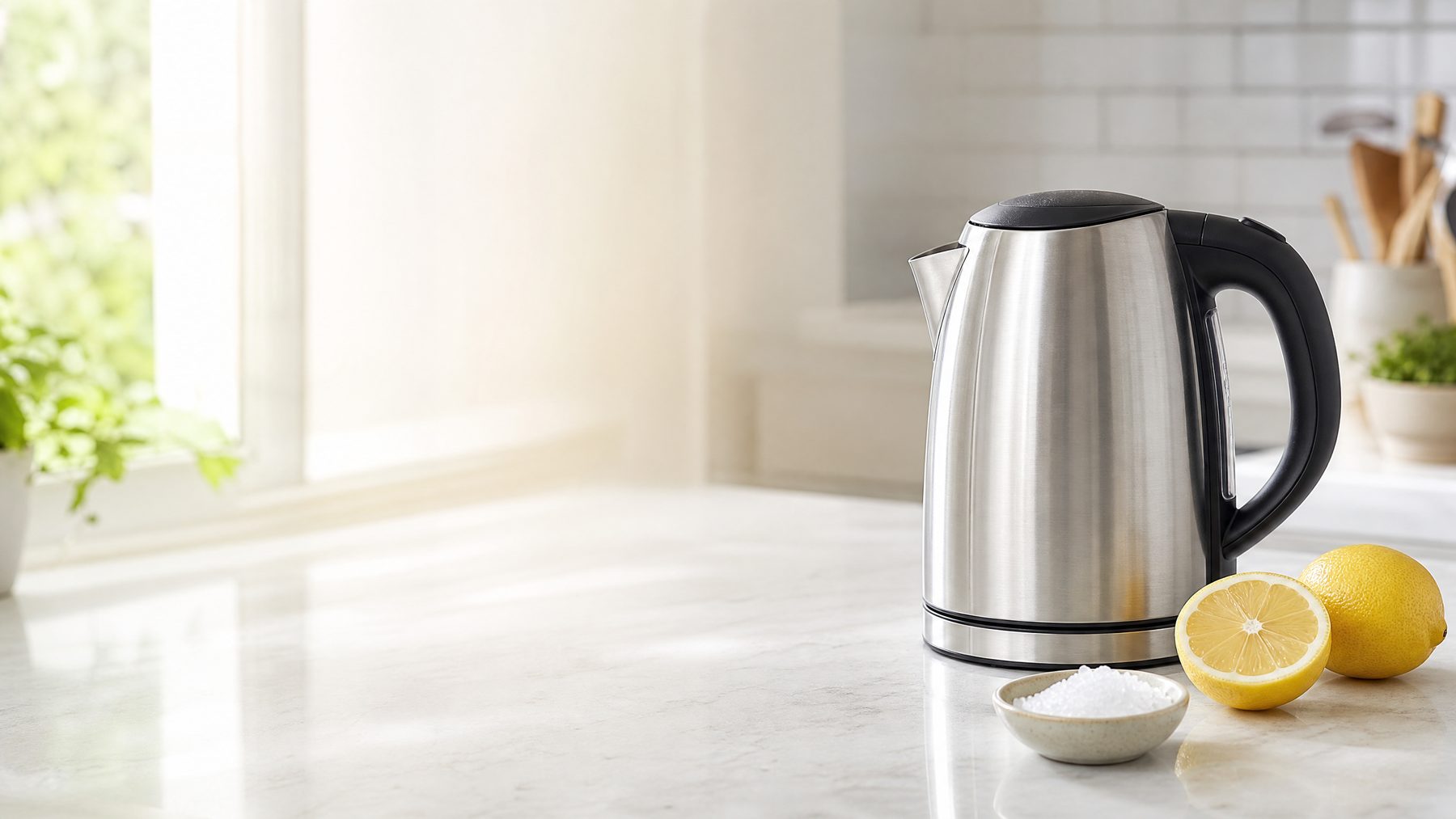
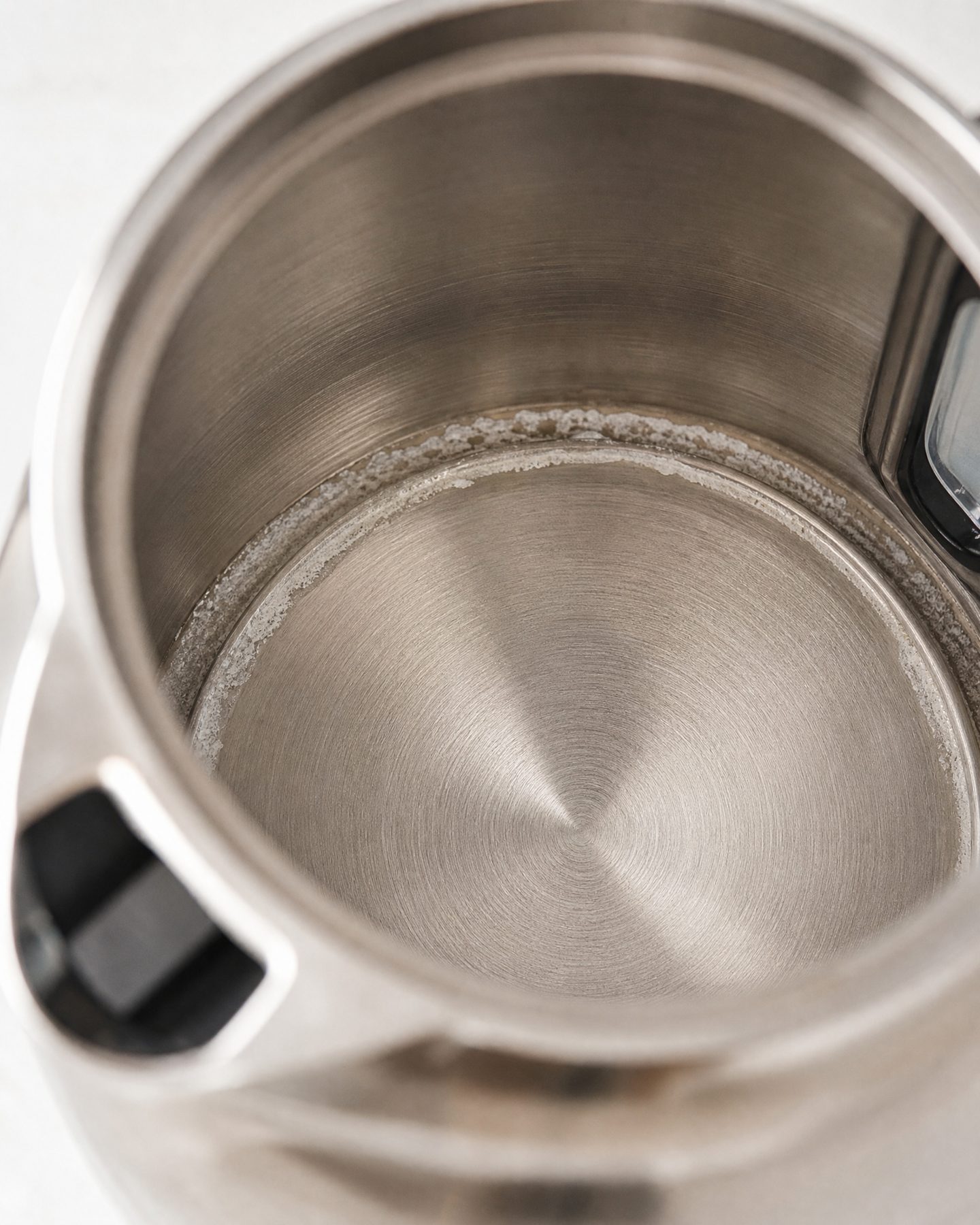
I first noticed kettle limescale when a few chalky flakes landed in my tea. Since then I have used vinegar, lemon, or powdered citric acid to clear the buildup, and I always finish with several plain-water boils so the next cup does not taste like the cleaning solution. For a similar natural method, see our microwave cleaning hacks.
Tools and materials (concise table)
| Item | Why you need it |
|---|---|
| Soft cloth or sponge | For wiping and final clean |
| Non-abrasive brush or toothbrush | To work scale out of corners and filters |
| Measuring spoon and cup | Accurate acid amounts and water volumes |
| White distilled vinegar OR fresh lemon juice OR powdered citric acid | Mild, food-safe descalers |
| Paper towels or clean dish towel | Draining and drying parts |
| Plastic or silicone spatula (optional) | Lift loose flakes without scratching |
| Funnel (optional) | Easier pouring for cramped spouts |
Safety first:
-
Unplug the kettle and let it cool fully before opening or touching the interior. Never immerse the electrical base or plug in water; water and electricity don’t mix [2].
-
If your skin is sensitive, wear gloves when handling concentrated solutions or when you plan prolonged contact.
-
Avoid metal scrubbers or steel wool; they scratch stainless steel, glass, or coatings and can void warranties [2].
-
Rinse thoroughly after any acid treatment. Residual acid can affect taste and, over time, corrode parts if not removed.
-
Follow your kettle’s manual first. If the manufacturer explicitly warns against vinegar or other acids, follow their recommendation [2].
Why descale at all Limescale is the chalky buildup of calcium and magnesium left when hard water is heated. It reduces heating efficiency, can give brewed drinks a faint off-taste, and flakes into cups. Regular, gentle descaling preserves performance and keeps water tasting neutral.
If your water is hard, deposits form faster; in softer areas they appear more slowly. Many manufacturers publish cleaning steps similar to these; KitchenAid and Fellow both offer guidance recommending mild acid rinses and manual checks before cleaning. For another water-heating appliance, see how to keep your coffee maker mold-free and fresh [1].
How limescale forms (short primer)
When you heat mineral-rich water, dissolved minerals concentrate and solidify on hot surfaces. Over time these deposits form visible white crusts or flakes. Exposed heating elements, stainless interiors, and glass bodies show this differently, but the underlying chemistry is the same. Repeated heating cycles without regular rinsing encourage build-up.
Which method to pick (quick orientation)
-
Light deposits or routine maintenance: powdered citric acid or fresh lemon juice — fast, low odor, food-safe. KitchenAid lists a one-tablespoon citric or lemon treatment as a common option.
-
Moderate build-up: diluted white distilled vinegar is inexpensive and effective for many kettles; KitchenAid recommends a 1:3 vinegar-to-water ratio for cleaning.
-
Heavy crust or older deposits: repeat mild treatments (citric acid overnight soaks are effective) rather than aggressive scraping. If your manual forbids vinegar, use citric acid or a manufacturer-approved descaler.
A quick note on manufacturer guidance
Always check your model manual before you start. Some kettles have coatings, hidden sensors, removable filters, or sealed bases that need specific care. Follow the manual over any general guide. If in doubt, contact the manufacturer.
Numbered step-by-step procedure — Vinegar method (pantry-friendly; for moderate scale)
-
Unplug the kettle and allow it to cool completely. Remove any loose debris with a paper towel.
-
Mix one part white distilled vinegar with three parts water. Measure enough to cover the areas with scale or fill to the normal maximum if scale is widespread. KitchenAid suggests the 1:3 vinegar-to-water ratio for cleaning.
-
Place the kettle on its base, plug it in, and bring the solution to a gentle boil. If your model requires the kettle to sit on the base to heat, keep it there; otherwise, follow your model’s guidance. Turn off after it reaches a boil.
-
Let the vinegar solution sit in the kettle for 15–60 minutes depending on deposit severity. Check after 15 minutes and lengthen the soak as needed.
-
Pour the solution into the sink and rinse the kettle thoroughly. Fill with fresh water, bring to a boil, then pour out. Repeat a second fresh-water boil-and-drain cycle to remove lingering vinegar taste; KitchenAid specifically recommends two rinse-boil cycles after vinegar treatment.
-
Wipe the interior with a soft cloth. For stubborn spots, use a non-abrasive brush or toothbrush. Rinse again and let the interior dry with the lid off.
Notes for the vinegar method
-
If the smell bothers you, finish with a lemon rinse (one tablespoon lemon juice per kettle of water) and one boil.
-
For cordless kettles, check whether they must sit on the base to heat; do not submerge the base at any time.
Numbered step-by-step procedure — Lemon juice or powdered citric acid method (low-odor)
-
Unplug and cool the kettle. Remove loose deposits as you can by hand or with a paper towel.
-
Add one tablespoon of fresh lemon juice OR one tablespoon of powdered citric acid dissolved in enough water to cover the base and contact the scale. KitchenAid mentions the one-tablespoon lemon or citric option as an effective approach.
-
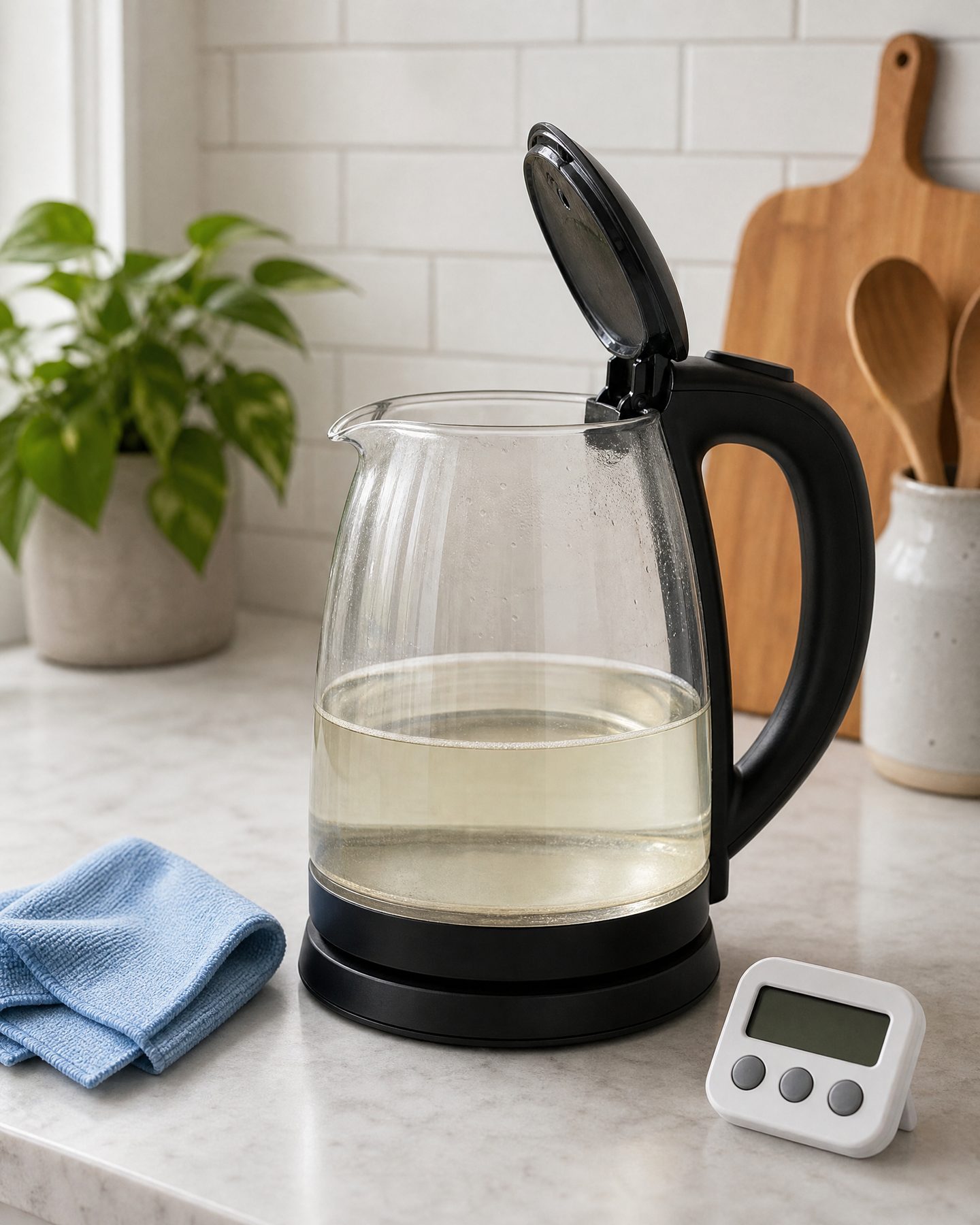
Heat the solution gently until warm or bring to a boil, then switch off. Let it sit for 15–30 minutes. Powdered citric acid often works faster than fresh lemon juice.
-
Empty the solution, scrub gently with a soft brush where needed, and rinse thoroughly. Run one or two fresh-water boil-and-drain cycles to clear any residual flavor.
When to use an overnight soak
For thick, old deposits, dissolve 1–2 tablespoons powdered citric acid in hot water just enough to cover the scale and let the kettle sit unplugged for 6–8 hours or overnight. After soaking, empty and gently brush the softened scale away. Repeat if needed rather than resorting to harsh mechanical scraping.
Removing and cleaning removable filters
If your kettle has a mesh filter, remove it per the manual. Soak the filter for 10–15 minutes in vinegar or citric solution, then brush gently under running water. Dry fully before reinstalling. Replace the filter if it is crumbling, corroded, or misshapen.
Dealing with heavy or old scale
-
Start with citric acid overnight soak rather than aggressive scraping. Dissolve 1–2 tablespoons citric acid in hot water that just covers the scale and leave it undisturbed for several hours.
-
After soaking, use a plastic or silicone spatula to lift large softened flakes; avoid metal tools. Follow with a soft-bristled brush to clear remaining residue.
-
Rinse well and perform at least one fresh-water boil-and-drain cycle.
-
Repeat gentle treatments rather than forceful scraping; repeated mild chemical action is safer for internal parts and finishes.
Glass, enamel, and concealed elements
-
Glass kettles: these show scale clearly; citric or lemon works well and typically leaves a fresher scent than vinegar. Don’t use abrasive pads that can etch glass.
-
Enamel or coated interiors: check the manual first. Some coatings can react poorly to acids or scrubbing. If the manual forbids vinegar, use the manufacturer’s recommendation or a mild citric treatment as allowed.
-
Concealed heating elements: scale can bond tightly to concealed plates. Citric acid and repeated gentle treatments are preferable; avoid scraping against the element surface.
Maintenance habits that help
-
Empty the kettle after each use. Standing water concentrates minerals and speeds scale formation.
-
Use filtered or softened water if your tap is very hard. A basic pitcher filter lowers mineral content and slows scale.
-
Wipe the interior and lid periodically to remove early film before it hardens.
-
Descale frequency guide: in very hard water areas, descale monthly to every six weeks; moderate hardness every 2–3 months; soft water every 4–6 months. Adjust based on how fast deposits return.
How to test your water hardness (quick)
-
Check your local water utility’s annual report for hardness in grains per gallon (gpg) or ppm.
-
Buy inexpensive hardness test strips from a hardware or pool store.
-
Watch for signs: frequent white scale on kettles, spotting on glassware, or heavy soap scum indicate hard water.
Troubleshooting table
| Problem | Likely cause | Fix |
|---|---|---|
| Persistent white flakes after cleaning | Incomplete rinsing or remaining micro-deposits | Repeat two fresh-water boil-and-drain cycles; wipe interior; run a 15–30 minute citric soak and scrub gently |
| Strong vinegar smell after cleaning | Vinegar residue not fully removed | Boil and discard fresh water twice; run a lemon rinse and boil once to neutralize odor |
| Stubborn scale that won’t budge | Very old, thick deposits | Try overnight citric soak (1–2 tbsp) then gentle plastic scraping and brushing; repeat treatments rather than aggressive tools |
| Brown or tea stains on interior | Tannin or mineral staining | Citric acid or lemon soak usually clears tannin; for exterior stainless stains, use mild detergent and soft cloth |
| Kettle won’t turn on after cleaning | Water entered base or connector | Unplug immediately, let dry 48–72 hours in a warm dry spot; if still faulty, contact manufacturer or service |
| Filter is crumbling | Corrosion or age | Replace filter; do not re-use crumbling filters |
Quick self-check
| Scenario | Best quick action |
|---|---|
| Light scale along waterline | One-tablespoon citric acid or lemon soak, heat briefly, rinse thoroughly |
| Vinegar smell lingering | Two fresh-water boil-and-drain cycles; air with lid off |
| Clogged removable mesh filter | Remove, soak in citric solution 10–15 minutes, brush gently, dry, reinstall |
| Thick crust on bottom | Overnight citric soak, plastic scraping, gentle brushing |
| Manual warns against vinegar | Follow manual; use citric acid or recommended product |
Environmental and disposal notes
Vinegar and citric acid solutions used at household concentrations are safe to pour down a standard drain. If you empty larger volumes, flush with plenty of water. Avoid dumping concentrated acid into sensitive septic systems without dilution and flushing.
Drying, reassembly, and a quick pre-use checklist
-
After final rinses and boil cycles, empty the kettle and leave the lid off until fully dry.
-
Reinstall the filter only when dry to avoid trapping moisture.
-
Wipe the base connector area dry and inspect it for damage or residue before reconnecting to power.
-
Run a final test: kettle powers on, heats normally, and has no odd smells or noises. Throw away the first cup of boiled water or any drink you make immediately after a heavy clean to ensure taste returns to normal.
When to stop and call for help If you’ve followed gentle descaling steps and the kettle still leaks, won’t power on, or shows signs that water reached electrical parts, stop using it.
If you detect corrosion at connectors, loose seals, burnt smells after drying, or visible damage to the base or wiring, contact the manufacturer or an authorized repair center. For devices under warranty, contact the manufacturer before attempting any disassembly that could void coverage.
When a commercial descaler might be the better choice
If your manual recommends a specific descaler, or if gentler household acids don’t remove heavy deposits after several attempts, consider a purpose-made product approved by the manufacturer. Use manufacturer-recommended products to avoid damaging coatings or invalidating warranties.
Common beginner mistakes and how to avoid them
-
Pouring concentrated acid and immediately scrubbing: heat and soak first; the acid dissolves scale and reduces abrasive effort.
-
Using metal tools: they scratch and can damage internal surfaces—use plastic spatulas and soft brushes.
-
Skipping rinse cycles: always do at least one; after vinegar, do two boil-and-drain cycles as advised.
-
Forgetting the filter: remove, soak, and brush the mesh on every descale; it traps most loose deposits.
A practical plan and small rituals I recommend
-
Set a schedule based on your water hardness and put a reminder on your phone or a small sticker under the kettle with the last descale date.
-
After a heavy descale and rinse, brew and discard one cup of tea or coffee to make sure flavor is neutral.
-
If you see scale returning quickly, try switching to filtered water or reduce the amount you fill the kettle to lower mineral load.
Final practical thought
Regular, gentle descaling with citric acid or diluted vinegar keeps kettles efficient and prevents gritty flakes in your cup. Start with the mildest effective method and follow your kettle’s manual. If in doubt or if electrical parts are affected, stop and contact the manufacturer or a professional service.
References
-
KitchenAid, How to Clean an Electric Kettle: https://www.kitchenaid.com/countertop-appliances/pinch-of-help/how-to-clean-an-electric-kettle
-
Fellow Products, How Do I Clean, Maintain and Descale My Fellow Electric Kettle?: https://help.fellowproducts.com/hc/en-us/articles/115001707911-How-do-I-clean-maintain-and-descale-my-Fellow-electric-kettle
Leave a Reply