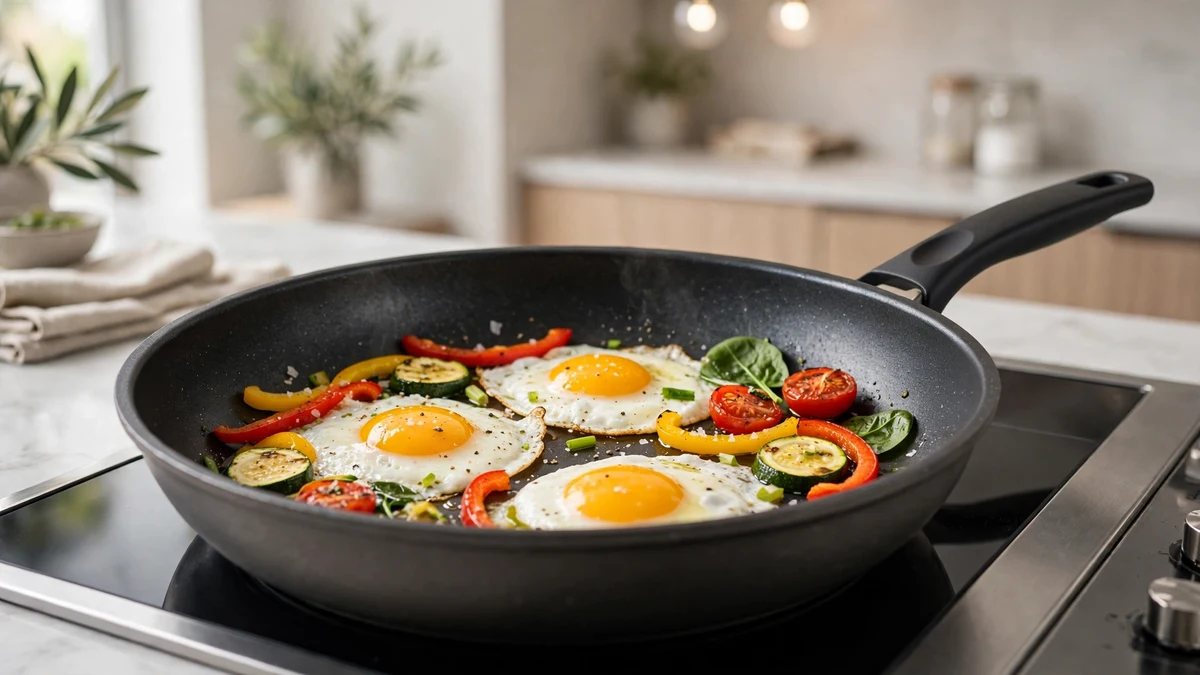
A nonstick pan should make eggs, pancakes and delicate fish easier to cook and release. It should not feel disposable after a handful of months. The truth is that every coated pan has a finite working life: heat, abrasion, cooking sprays, utensils and cleaning habits all affect how long the surface performs. No honest guide can promise that a nonstick coating will never wear or peel.
The better goal is to choose a well-made pan, use it within its temperature limits and protect the coating. These five options represent different approaches, from reinforced PTFE-style surfaces to ceramic nonstick. The guide focuses on comparing coating types, pan construction, everyday cooking performance, and care requirements. Coating longevity varies with formulation, cooking temperature, utensils, cleaning, storage, and frequency of use. Check the exact pan size, cooktop compatibility, and current listing before buying.
Why nonstick coatings wear
High heat is one of the biggest enemies of coated cookware. Empty preheating, burner settings that are too high and broiler use can damage a surface or exceed the maker’s limits. Abrasive cleaning and metal utensils can scratch it. Stacking pans without protection can create wear when cookware shifts in a cabinet.
PTFE and ceramic coatings are not identical. PTFE surfaces are valued for slick food release and are common in traditional nonstick pans. Ceramic coatings are generally marketed as PTFE-free and can offer good release when new, but their performance can decline with heat and wear. Neither type is permanent. Follow the maker’s care instructions rather than assuming ceramic means indestructible.
Five nonstick pans to compare
Affiliate disclosure: KitchFinds may earn a commission from qualifying purchases made through links in this guide. As an Amazon Associate, we earn from qualifying purchases.
5. GreenPan Valencia Pro 8″, 9.5″ and 11″ Frying Pan Set — ceramic coating option

- SET INCLUDES: 8″ frying pan, 9.5″ frying pan, and 11″ frying pan
- ATK AWARD-WINNING DESIGN: Valencia Pro recognized by America’s…

This Valencia Pro set includes 8-inch, 9.5-inch and 11-inch frying pans, making it a better fit if you want the 11-inch skillet plus two smaller everyday sizes. The hard-anodized pans use GreenPan’s ceramic nonstick coating, marketed as PFAS-free, and are designed for induction cooking. Check the listing and care instructions for the exact set’s dishwasher and oven limits. As with other ceramic nonstick cookware, use moderate heat and gentle utensils; the coating is not permanent.
- Reasons to consider it: Three pan sizes give you options for small portions, everyday eggs and larger skillet meals.
- Another advantage: The ceramic coating is marketed as PFAS-free, and the hard-anodized set is designed for induction cooktops.
- The drawback: Ceramic nonstick release can fade with use, so the coating should not be treated as permanent.
- Best suited to: You want a coordinated set of ceramic-coated pans in several sizes and value the marketed PFAS-free surface.
4. T-fal Ultimate Hard Anodized — practical everyday nonstick
- Heavy Gauge Construction: Built to stand the test of time…
- Everything you need: Our 12 inch frypan with lid is perfect for…
T-fal’s hard-anodized range is a familiar option for eggs, pancakes and quick skillet meals. The hard-anodized body is designed for regular kitchen use, while the nonstick surface makes cleanup easier. Confirm the precise pan size and cooktop compatibility; not every T-fal line shares the same base construction. Use silicone, nylon or wooden utensils and avoid maximum heat.
- Reasons to consider it: The hard-anodized body is intended for regular use, while the nonstick surface makes delicate foods easier to release.
- Another advantage: It suits quick everyday cooking such as eggs, pancakes and simple skillet meals.
- The drawback: The coating still needs gentle utensils and moderate heat, and cooktop compatibility depends on the exact version.
- Best suited to: Everyday cooks who want a familiar nonstick pan for quick meals and easy cleanup.
3. Tramontina Professional 10-Inch — value-focused workhorse

- A Kitchen Essential for Daily Use: Designed for versatility, this…
- Reinforced Non-Stick Coating: Provides superior food release for…
The Professional Restaurant Fry Pan is a popular value-oriented option with a reinforced nonstick surface and restaurant-style shape. A 10-inch skillet is useful for eggs, grilled sandwiches, smaller portions of vegetables and quick fish fillets. Check product instructions for oven limits and dishwasher guidance. Like any coated pan, it lasts longer when you avoid metal tools, high heat and abrasive pads.
- Reasons to consider it: The reinforced nonstick surface and restaurant-style shape offer a practical everyday setup.
- Another advantage: Its 10-inch size is handy for eggs, sandwiches, fish fillets and smaller portions.
- The drawback: A 10-inch cooking area can feel cramped when preparing larger family portions.
- Best suited to: Value-focused shoppers who mainly cook for one or two people and want a straightforward skillet.
2. All-Clad HA1 Hard Anodized Nonstick — premium everyday skillet
- This cookware set includes 8 inch and 10 inch Fry Pans, ideal for…
- Experience the ultimate cooking convenience at home with easy to…
All-Clad’s HA1 line pairs a hard-anodized body with a nonstick cooking surface. It is aimed at cooks who want a more substantial pan for daily use. The 10-inch skillet is versatile for eggs, fish and smaller meals; a larger pan is better for family portions. Confirm the oven-safe temperature for the specific item. The coating still needs gentle care regardless of the pan’s premium positioning.
- Reasons to consider it: The hard-anodized body gives the pan a substantial feel for regular stovetop use.
- Another advantage: Its 10-inch format handles eggs, fish and smaller everyday meals with nonstick convenience.
- The drawback: The premium positioning does not make the coating permanent; it will still wear and needs careful use.
- Best suited to: Cooks willing to pay more for a substantial everyday nonstick skillet and prepared to maintain it gently.
1. OXO Good Grips Pro Hard-Anodized Nonstick 10-Inch Frying Pan — balanced everyday pick

- TOP-RATED NONSTICK: Cook’s Illustrated’s highest-rated nonstick…
- DIAMOND-REINFORCED CERAMIC: Premium ceramic nonstick coating…
OXO’s Good Grips Pro hard-anodized skillet is a strong all-round option to compare for its comfortable handle, sturdy feel and practical nonstick format. This 10-inch frying pan is a practical size for eggs, fish and everyday meals for one or two people. If you regularly cook larger portions, compare the 12-inch version separately. Check the exact version for induction compatibility and oven limits. It is not peel-proof: use moderate heat, soft utensils and nonabrasive cleaning.
- Reasons to consider it: The comfortable handle and sturdy hard-anodized format make it an appealing everyday option.
- Another advantage: A 10-inch pan is easy to manage for eggs, fish and meals for one or two people.
- The drawback: The 10-inch size may be too small for larger portions, so frequent family cooks may want the 12-inch version.
- Best suited to: People looking for a balanced everyday pan for smaller households and routine nonstick cooking.
How to make a nonstick pan last longer
Use low to medium heat for most nonstick cooking. If a recipe needs a hard sear, stainless steel or cast iron is usually a better tool. Avoid heating an empty pan for long periods. Add a little oil or butter when appropriate, but avoid aerosol cooking sprays unless the maker approves them; some sprays can leave residue that affects food release.
Choose silicone, nylon or wooden utensils. Do not cut food in the pan, and do not use a knife to lift stuck ingredients. Let the pan cool before washing rather than placing a hot pan under cold water. Clean with a soft sponge and mild detergent. If you stack pans, put a protector or clean cloth between them.
Retire a pan when the coating is visibly flaking, peeling or deeply scratched, or when food release has deteriorated. Do not try to season a coated pan like cast iron. A worn nonstick surface is not a restoration project.
What size should you buy?
An 8-inch pan is useful for one egg or a small side, but limiting as an only skillet. A 10-inch pan is versatile for one or two people. A 12-inch pan gives more room for family portions and reduces crowding, although it is heavier and may not fit smaller burners. Choose the size that fits your usual meals and cooktop rather than automatically buying the largest.
Which pan is right for you?
Choose GreenPan if ceramic coating is a priority and you are comfortable following its care requirements. T-fal and Tramontina are practical everyday options. All-Clad HA1 is worth comparing if you want a premium-feeling skillet, while OXO is a balanced all-round pick. The best way to avoid early peeling is not a magic coating: it is buying the right pan and treating the surface gently.
Quick decision helper
Choose the description that sounds most like your kitchen. Open it to see the matching recommendation.
Ceramic, PTFE-free coating
Everyday value
Premium-feeling skillet
Roomy all-rounder
Easy-care everyday cooking
Compare Tramontina and T-fal in the size you need.
Buying checklist
- Confirm compatibility with your cooktop.
- Check maximum oven temperature and handle limits.
- Read care instructions for utensils and cleaning.
- Choose a size that fits your burner and portions.
- Replace the pan if the coating begins to peel.
PTFE safety and sensible use
Modern PTFE nonstick cookware is designed for normal food preparation when used according to the manufacturer’s directions. The main practical concern is overheating an empty pan or using it beyond its stated temperature limits. High heat can damage the coating and may release fumes. Keep birds away from cooking fumes, use ventilation and avoid leaving an empty coated pan heating unattended.
Do not use a nonstick skillet for tasks that require extreme heat. For hard searing, broiling or high-temperature oven cooking, stainless steel, cast iron or carbon steel is generally a better fit. Match the pan to the cooking method rather than trying to make one coated skillet do every job.
Why ceramic nonstick can lose release performance
Ceramic-coated pans are often marketed as a different alternative to traditional PTFE coatings. They can feel exceptionally slick at first, but the release performance may diminish with repeated heating and cleaning. Using high heat, cooking without suitable fat when the recipe needs it, and abrasive cleaning can shorten the useful life. Treat ceramic surfaces gently just as you would conventional nonstick.
When to replace a pan
Small cosmetic marks on the outside of a pan are not the same as damage to the cooking surface. But if the interior coating is peeling, flaking or deeply scratched, stop using the pan and replace it. Do not attempt to scrape or sand the surface back to a smooth finish. Follow the manufacturer’s care and disposal guidance for the specific cookware.
One nonstick pan is not always enough
If you cook frequently, a small set of cookware can be more useful than one oversized nonstick skillet. Keep a 10- or 12-inch nonstick pan for eggs, pancakes and delicate foods, and use stainless steel or cast iron for browning and high-heat tasks. This division of labor can reduce wear on the nonstick surface because it is not being used for jobs it was never designed to handle.
Pay attention to the handle and base
A comfortable handle makes a pan easier to lift, tilt and transfer from burner to counter. A helper handle can be useful on larger skillets, particularly when the pan is full. The base should sit flat and match your cooktop; for induction, check the exact model’s compatibility rather than relying on the product family name. If possible, consider the pan’s weight when empty, because a 12-inch skillet full of food can be awkward to move.
Look at the pan’s sides as well as its diameter. Sloped sides make it easier to slide an omelet onto a plate, while straighter sides can provide more usable cooking area. The best shape depends on whether you mostly scramble eggs, fry pancakes, sauté vegetables or cook delicate fish.
What “Won’t Peel” Can Honestly Mean
No coated pan can be guaranteed never to wear, blister, or lose its release performance. A coating’s service life depends on its formulation, temperature exposure, utensils, cleaning, storage, and frequency of use. A pan that is overheated while empty, scraped with metal tools, or stacked without protection can deteriorate much sooner than one used within the manufacturer’s limits. If a coating is visibly flaking or the pan is warped, stop using it for cooking and follow the maker’s replacement guidance.
PTFE-based nonstick cookware should be used at the temperatures and conditions specified by its manufacturer. Avoid preheating an empty nonstick pan on high heat, and keep birds away from overheated cookware and kitchen fumes. Ceramic-coated pans are generally marketed as PTFE-free, but their release performance can also decline with wear and high heat. “Ceramic” does not mean indestructible or maintenance-free.
How to Compare Coated Pans Fairly
Check the pan’s actual cooking-surface diameter, base construction, weight, handle attachment, oven-safe limit, induction compatibility, and warranty. A heavier base may heat more evenly on some cooktops, but it can also be harder to lift. Confirm whether the listed size is the rim diameter or usable flat cooking area. A product family can include several coating generations, so verify the exact version and manufacturer care instructions rather than relying on a series name alone.
Product specifications and intended use are considered alongside the care requirements that influence coating longevity. Use the care instructions that accompany the exact pan you buy.
Manufacturer and safety references
These authoritative resources support the care, safety, or product-information points discussed above. Always follow the current instructions for your exact model.
How this guide was researched
This guide compares products using manufacturer product information, published specifications, available manuals, compatibility and warranty details, and the features that matter for the intended use. Where useful, available owner feedback and independent coverage provide additional context. Product details can vary by model and generation, so confirm the exact version, included accessories, and current manufacturer guidance before buying.



Leave a Reply