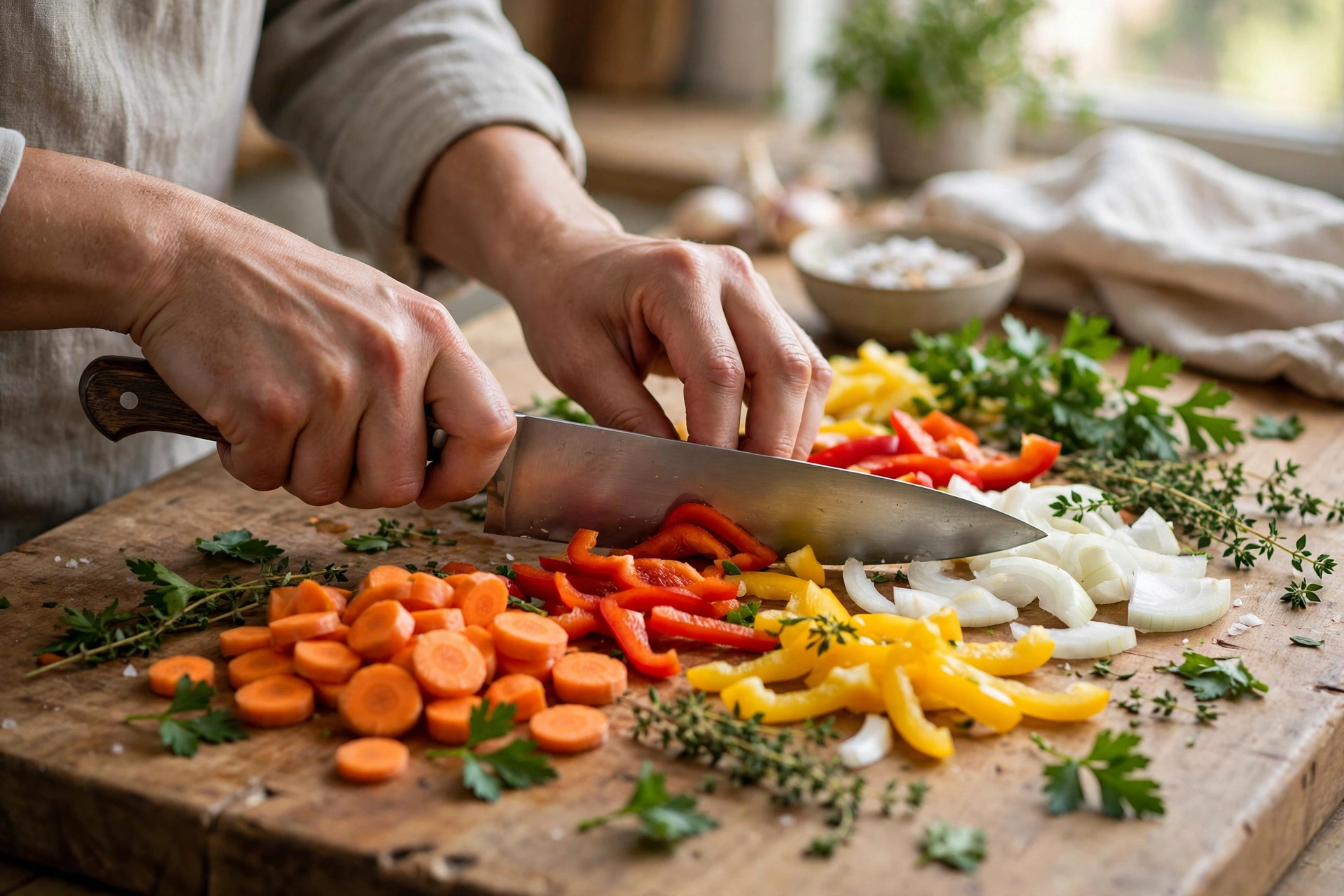
A good chef’s knife should make everyday prep feel controlled: slicing onions without crushing them, chopping herbs cleanly and cutting vegetables without a fight. You do not need to spend several hundred dollars to get a useful knife. Under $100, there are dependable workhorses, lighter Japanese-style blades and budget options that can be sharpened and maintained for years.
There is no single best knife for every hand. Blade height, weight, handle shape and balance affect comfort as much as the steel name. These seven picks are arranged from entry-level value toward the strongest all-round choices. Prices move, so confirm the exact version remains under $100 when you shop.
What to look for
Length: An 8-inch blade is the easiest starting point for most home cooks. A 7-inch santoku can feel nimble for smaller hands and compact workspaces.
Steel: Harder steel can hold a fine edge longer but may be less forgiving if twisted against hard food. Softer stainless steel is often easier to sharpen. Neither is maintenance-free.
Handle: A handle should feel secure when dry and slightly damp. A grippy synthetic handle can be more practical than a decorative but slippery finish.
Care: Hand-wash and dry promptly, use wood or plastic boards, and keep the edge away from bones and frozen food.
Seven knives worth a look
7. imarku 7-Inch Santoku — affordable compact option
- Professional Chefs Knife: This imarku super sharp chef’s knife…
- Ultra-Sharp Edge: Sharpness is key. The professional sharp knife…
A santoku has a shorter, taller blade than a traditional chef’s knife, which can feel easy to control for vegetables, boneless proteins and everyday slicing. This is a budget-friendly way to try that shape without a major investment. Treat it as an entry-level knife: inspect the edge on arrival, keep it away from bones and frozen food, and sharpen it when it begins to drag. Its appeal is value and approachable size rather than premium finishing.
- In its favor: The shorter, taller santoku shape can feel controlled for vegetable prep and boneless ingredients.
- Another advantage: Its compact format and budget positioning make it an accessible way to try a Japanese-style blade profile.
- The drawback: The smaller blade is less suited to large ingredients or heavier cutting jobs, and it should not be used on bones or frozen food.
- Best suited to: Cooks with smaller hands or limited prep space who mostly slice vegetables and boneless proteins.
6. PAUDIN 8-Inch Chef Knife with Sheath — budget starter

This PAUDIN 8-inch version is listed with a sheath, making it easier to protect the blade in a drawer or when storing it away from a knife block. Its broad profile gives you room for rocking cuts and a useful flat section for chopping. As with other budget knives, inspect the edge on arrival and use a suitable cutting board. It is a starter option for shoppers who want a full-size chef’s knife without spending heavily.
- In its favor: The full 8-inch blade gives you room for everyday chopping and rocking cuts.
- Another advantage: The included sheath helps protect the edge when the knife is stored in a drawer.
- The drawback: As a budget starter, it may need edge attention sooner than a more refined, higher-end knife.
- Best suited to: First-time buyers who want a full-size chef’s knife and a simple way to protect it in storage.
5. Henckels Classic 8-Inch Chef’s Knife — traditional western profile
- ULTRA-SHARP BLADES: Superior professional-level sharpness that…
- STAYS SHARP LONGER: Professional, satin-finished blade boasts…

Henckels Classic is worth considering if you prefer a more substantial western chef’s knife. Its profile and handle style are designed for general-purpose prep, from chopping vegetables to slicing meat. The heavier feel can reassure cooks who like a knife with presence, although people who prefer a very light blade may find it less nimble. Check the exact Classic model because Henckels sells several lines with similar names.
- In its favor: The traditional western profile works across vegetables, meat and routine kitchen prep.
- Another advantage: Its more substantial feel can make the knife feel planted during longer chopping strokes.
- The drawback: The heavier build may feel tiring or less nimble to cooks who prefer lightweight blades.
- Best suited to: Home cooks who like a traditional, weighty chef’s knife rather than a light, agile one.
4. Mercer Culinary Millennia 8-Inch — low-cost workhorse

- QUALITY CONSTRUCTION: Knife is crafted with one-piece high-carbon…
- SUPERIOR DESIGN: Built to last ergonomic handle with textured…
The Millennia is a practical choice for frequent prep on a tight budget. Its high-carbon Japanese stainless blade and textured Santoprene handle are designed for straightforward everyday use. The secure grip is a strong point. Its stamped construction keeps the feel lighter than many forged knives. The edge will need maintenance, but it is a sensible first serious kitchen knife and a common option in culinary training environments.
- In its favor: The textured handle is designed to give a secure grip during everyday prep.
- Another advantage: Its lighter stamped construction and accessible price make it a practical workhorse.
- The drawback: The edge needs regular maintenance, and the strongly textured handle may not feel comfortable to everyone.
- Best suited to: Budget-conscious cooks who want a dependable daily knife for regular chopping and slicing.
3. Wüsthof Gourmet 8-Inch — for cooks who like heft

- Precision forged from a single blank of High Carbon Stainless…
- Full bolster and finger guard Full tang that is triple riveted to…
The Gourmet line offers a traditional German-style profile with more weight than many lightweight stamped knives. That can help when chopping dense vegetables or working through a large volume of ingredients. Heft is personal: a heavier knife can feel stable to one cook and tiring to another. Check the handle and balance if possible, and keep the edge away from bones and frozen foods.
- In its favor: The German-style profile and extra heft suit cooks who like a substantial blade.
- Another advantage: Its weight can help when working through dense vegetables or larger prep sessions.
- The drawback: The heavier feel can become tiring for users who prefer a nimble knife.
- Best suited to: Cooks who enjoy a weightier knife and often prepare large quantities of vegetables.
2. Mercer Culinary M23510 Renaissance 8-Inch — balanced value

- Great for culinary students and professionals alike
- Slices, chops, dices, and minces a large variety of ingredients…
Mercer Renaissance is a step up in feel from the Millennia line, with forged construction and a more traditional bolster-and-handle design. The full-size blade suits rocking through herbs, slicing onions and portioning boneless meat. Its balanced feel is the main reason to consider it. Wash by hand, dry promptly and keep the edge away from hard surfaces. Verify the exact Renaissance model and current price.
- In its favor: Forged construction gives it a more substantial feel than a basic stamped entry-level knife.
- Another advantage: The balanced, full-size blade is suited to rocking cuts, herbs, onions and boneless meat.
- The drawback: It needs hand-washing, prompt drying and routine sharpening to keep the edge in good condition.
- Best suited to: Someone ready to move beyond an entry-level knife and looking for a balanced everyday upgrade.
1. Victorinox Fibrox Pro 8-Inch — best all-round value

- For home chefs & professionals. This Fibro Pro chef’s knife has…
- Fit for all tasks. Designed to handle kitchen tasks both big and…
The Fibrox Pro is a long-standing recommendation for cooks who want a capable, low-fuss chef’s knife. It combines a high-carbon stainless blade with a textured synthetic handle designed to stay secure in the hand. Its light stamped construction makes it easy to maneuver for extended prep, while the 8-inch profile covers most everyday jobs. The compromise is that it does not have the dense, forged feel some cooks prefer. For a practical workhorse, the lightness and easy-care design are advantages.
- In its favor: The textured synthetic handle is designed to stay secure, while the light build is easy to maneuver.
- Another advantage: Its 8-inch blade handles a wide range of everyday prep without demanding a premium budget.
- The drawback: Cooks who prefer a dense, forged knife may find its lightweight stamped feel less satisfying.
- Best suited to: Most home cooks who want a practical, easy-to-handle knife for frequent everyday use.
How to care for a knife
Use a stable cutting board and keep the blade away from glass, granite and ceramic. Do not scrape chopped food across the board with the sharp edge; use the spine instead. Wash by hand, rinse and dry before storage. Even if a listing says dishwasher-safe, hand washing is kinder to the edge and handle over time.
Sharpen when the knife starts slipping on tomato skin or needs extra pressure through an onion. A honing rod can help between sharpening sessions, but it does not restore a truly dull edge. If you are new to sharpening, a reputable local service is a good way to protect the blade geometry.
Which knife is right for you?
For the most dependable all-rounder, start with the Victorinox Fibrox Pro. Choose Mercer Renaissance if you prefer a forged feel, or Millennia for a lower-cost workhorse. Wüsthof Gourmet and Henckels Classic suit cooks who prefer more heft. The imarku santoku and PAUDIN are budget entry points, with more variability in fit and edge performance.
Quick decision helper
Choose the description that sounds most like your kitchen. Open it to see the matching recommendation.
Lightweight everyday knife
Forged feel and balance
Lowest-cost workhorse
Heavier traditional blade
Shorter santoku profile
Knife-buying checklist
- Confirm the exact blade length and product line.
- Check that the handle shape suits your hand.
- Use a proper cutting board and store the knife safely.
- Do not pry, twist or cut bones with a chef’s knife.
- Check seller and return terms, especially for budget brands.
Affiliate disclosure: KitchFinds may earn a commission from qualifying purchases through links in this article.
Chef’s knife, santoku or nakiri?
A western chef’s knife usually has a curved edge that supports a rocking motion. It is a flexible shape for cooks who chop herbs, slice meat and work through a broad mix of ingredients. A santoku typically has a flatter edge and a shorter, taller blade. It can feel controlled for push cuts and vegetable prep. A nakiri is more specialized for vegetables, with a straight edge that makes full contact with the board.
If you are buying one knife, a chef’s knife is the most versatile starting point. If you already own one and want a second blade for vegetable work, a santoku may complement it. Choose the shape that matches your natural cutting motion rather than buying based on the name alone.
Does a more expensive steel always cut better?
Steel affects edge retention, toughness and sharpening behavior, but it does not tell the whole story. Blade geometry and factory sharpening matter enormously. A thin blade with a well-finished edge can feel sharper and cut more easily than a thicker knife made from a more expensive alloy. The handle and balance also influence how confidently you can guide the blade.
For most home cooks, a dependable stainless blade is a practical choice because it is relatively easy to maintain. Carbon steel can take a very keen edge but needs prompt drying and more care to avoid staining or rust. Do not pay extra for a steel designation if the knife’s shape and handle do not suit you.
How to check a knife when it arrives
Inspect the blade, handle and packaging before use. Look for visible damage, uneven fit or a loose handle. Test the edge carefully on a tomato or a sheet of paper while keeping fingers clear; do not run a finger along the edge. If the knife arrives damaged or clearly different from the listing, use the retailer’s return process rather than attempting a repair.
Keep the blade protected during storage. A loose knife in a drawer can damage its edge and create a hazard when reaching for other utensils. A blade guard, block or securely mounted magnetic strip is a better option. If you use a magnetic strip, place the spine against it first and roll the blade gently into position to reduce edge impact.
Comfort matters more than a long feature list
When comparing knives, consider how the handle meets your palm and whether the blade feels controllable at the tip. A knife that is technically sharp but uncomfortable may encourage awkward wrist positions. If you can, hold a similar model in a store before ordering. If that is not possible, read the dimensions carefully and compare the handle style with a knife you already find comfortable.
Do not choose a knife solely because it has dimples, a hammered finish or a dramatic pattern. Those details may look attractive, but they do not automatically improve cutting. A straight, well-maintained edge and sound geometry are more important. A simple knife that feels right in your hand will usually be used more often than a flashy blade that stays in the drawer.


Leave a Reply