
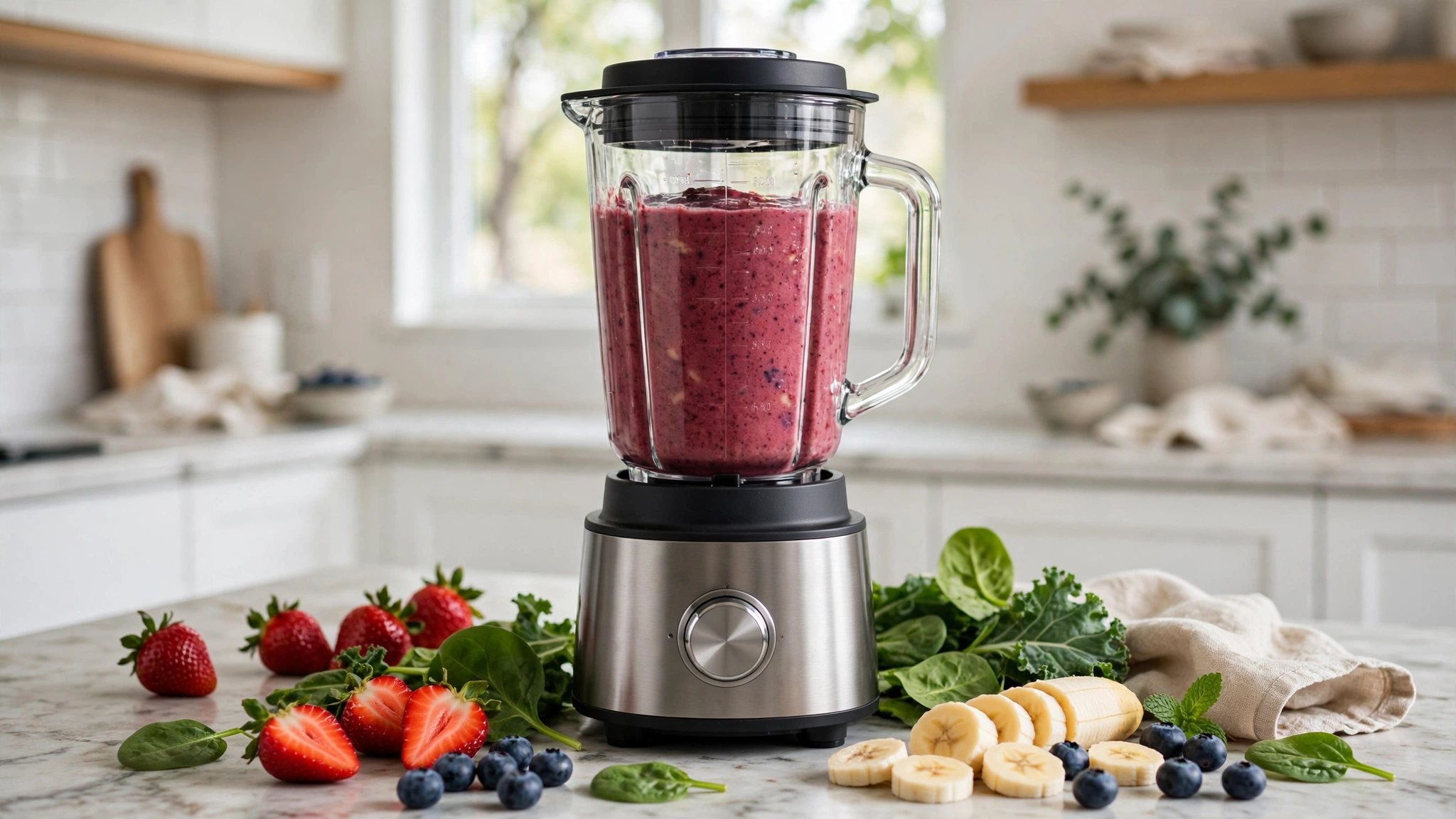
A blender can look impressive on a shop shelf and still struggle with the jobs you bought it for. A high wattage number, a stack of sharp-looking blades, and a long list of preset buttons do not tell the whole story. What matters is how well the machine handles the ingredients you use, how easy it is to clean, and whether it fits the way you cook.
If you mainly make fruit smoothies, you do not need the same machine as someone who crushes ice, blends nut butter, or prepares soups for a family. This guide explains what to check before buying, which specifications deserve attention, and where you can save money without ending up with a frustrating appliance.
Start with the jobs you want the blender to do
Write down the three or four things you expect to make most often. That short list is more useful than a feature checklist from a product box. A blender that makes silky berry smoothies may not be suited to thick hummus or frozen fruit, while a powerful countertop model may be awkward if you only blend one drink at a time.
Common jobs include:
- Soft fruit and protein shakes: Most basic countertop or personal blenders can manage these.
- Frozen fruit and ice: Look for a sturdy drive system, a jar designed to circulate ingredients, and clear guidance from the maker about ice crushing.
- Nut butter and thick dips: These need torque, a suitable container shape, and often a tamper. A small smoothie blender may overheat or stall.
- Soups and sauces: A countertop blender with a heat-safe jar and a vented lid can be useful. Never pour hot liquid into a sealed personal blending cup.
- Grinding dry ingredients: Check whether the manufacturer approves dry blending and offers a suitable jar. A wet jar is not automatically a good grain mill.
Blender wattage: useful, but not the whole story
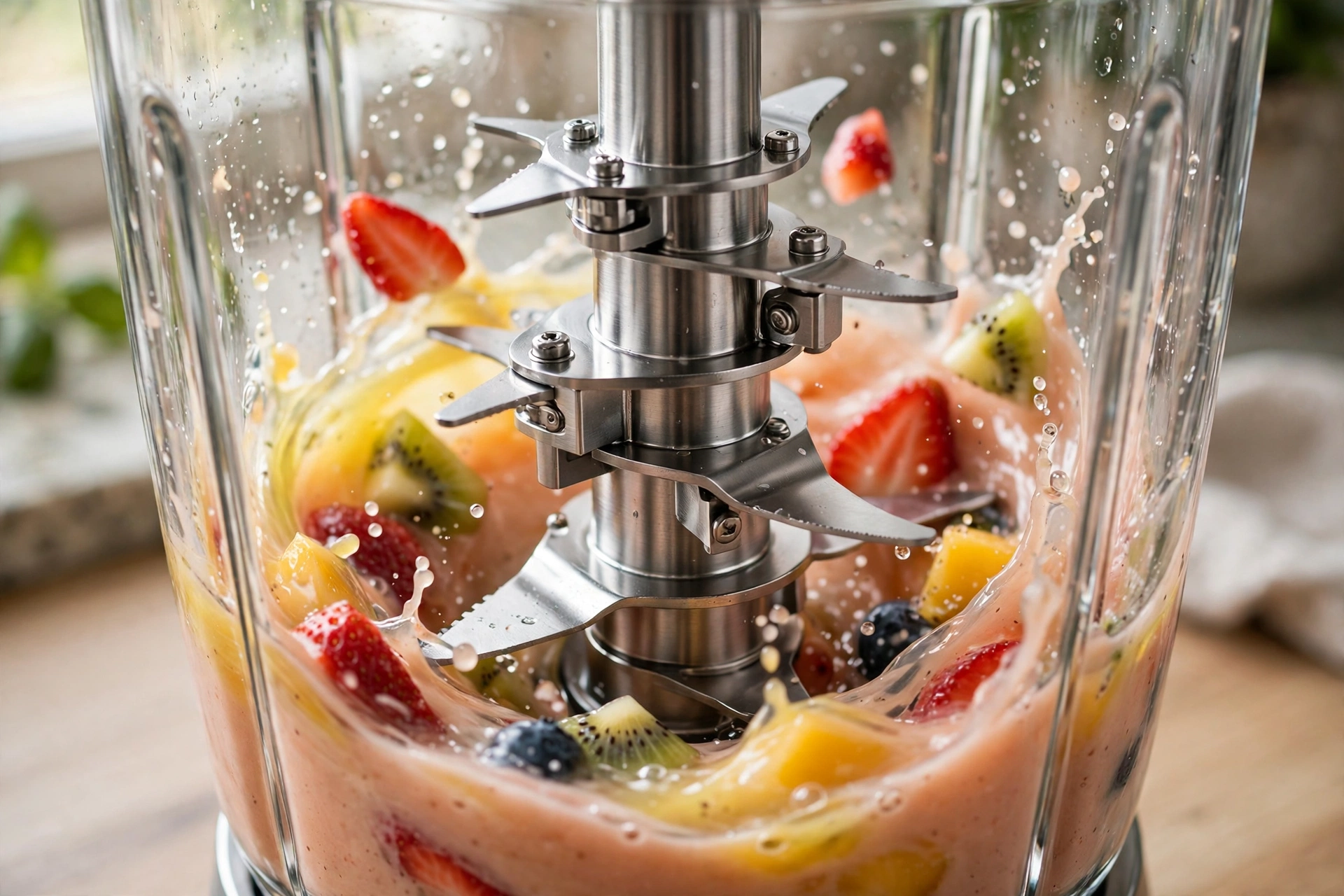
Wattage describes the electrical power a blender draws, not a direct measurement of how smooth your food will become. Two machines with similar wattage can perform differently because of motor design, blade assembly, jar shape, cooling, and how efficiently ingredients move through the container.
For light everyday blending, a modest machine may be enough. If you regularly process frozen fruit, fibrous greens, or thick mixtures, a stronger motor and better overall construction become more useful. Treat the number as one clue, then look for independent tests or detailed owner feedback that covers the exact foods you plan to blend.
What motor power can and cannot tell you
A higher wattage rating can indicate more capacity to handle demanding loads, but it does not guarantee that the blender will keep its speed under pressure. Some manufacturers advertise peak or maximum power, while others list operating power. Those figures are not always directly comparable.
Look for the rating definition in the product manual or specification sheet. If the seller only gives a large headline number without explaining it, do not make that number your deciding factor. Also check the duty-cycle guidance. A blender intended for short bursts may need rest periods when you prepare several batches.
Blade design: shape, placement, and movement matter
Blender blades do not work like kitchen knives. They do not need to slice every ingredient cleanly on contact. Their job is to create movement in the jar, pull food toward the cutting area, and keep ingredients circulating so the mixture becomes even.
Blade count alone tells you very little. A four-blade assembly is not automatically better than a two-blade design. Angle, spacing, sharpness, the shape of the bottom of the jar, and the speed of the motor all work together. A well-designed jar can create a strong vortex that moves food down toward the blades and back up the sides.
Check whether the blade assembly is removable. A removable unit can make cleaning easier, but it also adds seals and parts that must be fitted correctly. A fixed blade assembly can be simpler and less likely to leak, although you may need a brush to clean around it. Neither design wins in every case.
Jar shape and capacity are easy to overlook
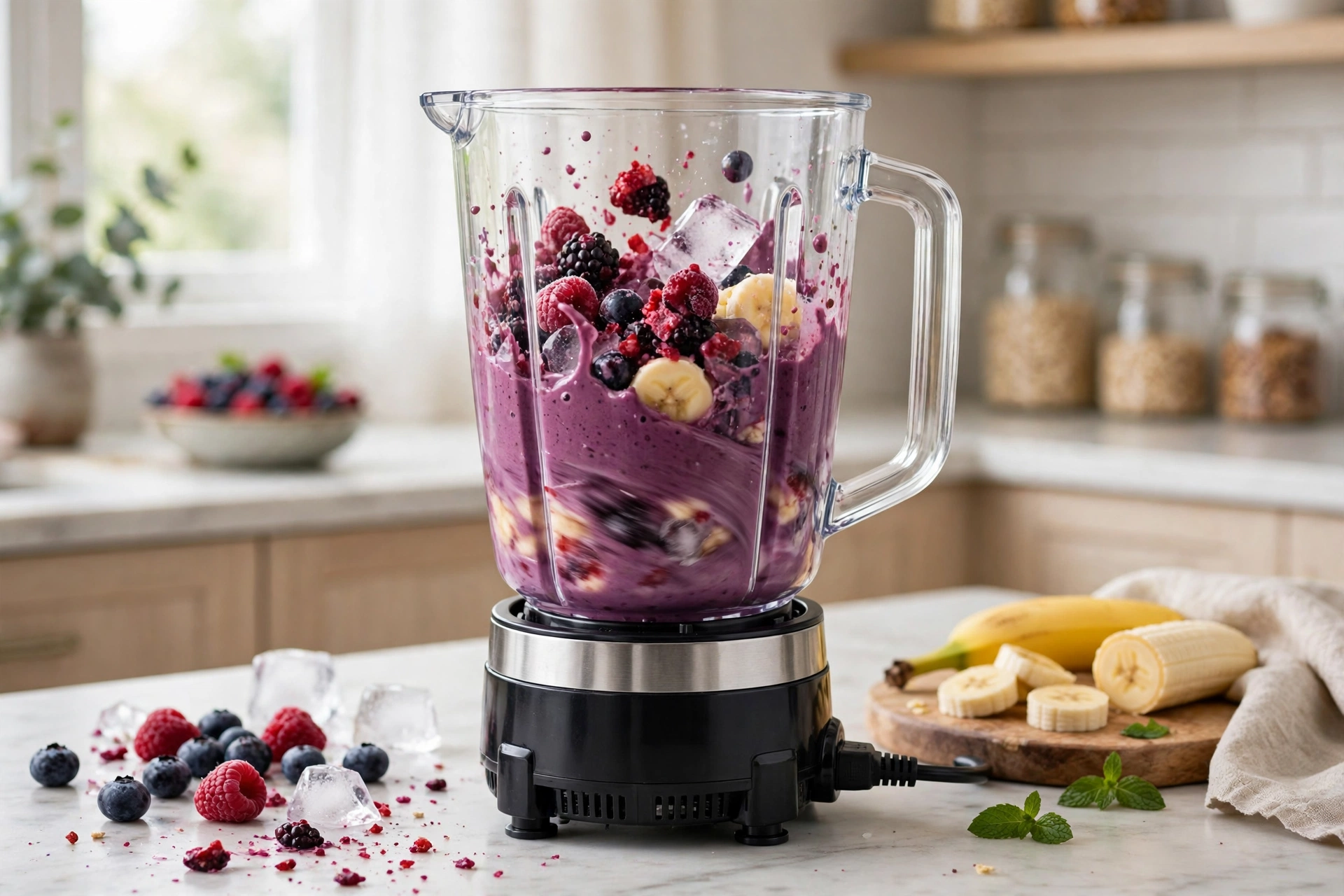
A wide jar gives you room to add ingredients and can be easier to scrape, but a very wide container may struggle with tiny portions. A narrow jar can help a small amount of food reach the blades, yet it may be harder to clean by hand. The shape should suit your usual batch size.
Capacity printed on the jar is not always the practical blending capacity. Leave space for ingredients to move, especially when blending liquids. If you regularly make a litre of soup or several smoothies at once, choose a jar with enough headroom rather than filling a smaller container to the rim.
Personal blenders are handy for single servings and quick cleanup. Full-size countertop blenders suit family portions and more varied tasks. If storage space is tight, measure the counter height under your cabinets and the space needed to lift the jar off the base.
Jar materials: glass, plastic, and personal cups
Glass jars resist scratches and do not hold onto odours as readily, but they are heavier and can break if dropped. Check the manufacturer’s temperature limits before using one for hot mixtures.
Plastic jars are lighter and less likely to shatter. Look for clear information about the plastic type, dishwasher safety, and whether the material can cloud or scratch over time. Avoid abrasive scrubbers if the manual warns against them.
Travel cups are convenient for a quick drink, but they are not all designed for hot liquids or thick blends. Confirm that the cup locks securely onto the base and that the drinking lid seals well before carrying it in a bag.
Controls and speed settings
More buttons do not necessarily make a blender better. A simple low, high, and pulse setup can handle most jobs. Pulse gives you short bursts of power and helps break up ingredients without running the motor continuously. Variable speed is useful when you want control over texture, from chunky salsa to a smooth puree.
Preset programs can be helpful if they match what you make. They usually combine speed and timing, but the result still depends on the recipe, load size, and ingredients. Do not pay extra for a dozen presets if you expect to use only one or two.
Noise, cleaning, and repairability
Blenders are loud appliances, especially when crushing ice. If noise matters in your home, look for measured noise comparisons rather than vague claims such as quiet operation. A heavier base and stable feet can reduce movement, but they will not make a high-speed motor silent.
Cleaning should be quick enough that you do not avoid using the machine. Some jars can be cleaned with warm water and a little dish soap by running the blender briefly, followed by a thorough rinse. This does not replace proper cleaning around the gasket, lid, and blade assembly when food gets trapped there.
Before buying, check whether the company sells replacement jars, lids, gaskets, and blade assemblies. A blender becomes expensive if one cracked cup makes the entire unit unusable. Read the warranty terms and find out whether the motor base and accessories have different coverage.
Features worth paying for—and features you can ignore
- Worth considering: A stable base, overload protection, a pulse control, a jar that suits your batch size, a useful tamper for thick blends, and available replacement parts.
- Useful for some kitchens: Variable speed, preset programs, a personal cup, or a separate dry-ingredient container.
- Often less important: Decorative lights, a very high preset count, a blade-count claim without performance evidence, and a huge wattage number with no clear rating method.
How to compare two blenders in the shop
Compare the same details for each model. Note the operating power, jar capacity, jar material, controls, approved uses, warranty, and replacement-part availability. Then look for detailed independent reviews and owner feedback that describe performance with frozen fruit, leafy greens, ice, and small portions—not just a simple water demonstration.
Pay attention to complaints that appear repeatedly. One isolated report of a leak may be bad luck. A pattern of cracked jars, burning smells, loose blade assemblies, or poor customer support deserves more weight. Reviews are most useful when people explain what they blended and how long they owned the machine.
A simple blender buying checklist
Use this quick check before you choose a model. It focuses on the details that affect everyday use rather than marketing claims.
Blender fit check
Open each item and check it against the blender you are considering.
Your usual recipes
Can it handle your regular smoothies, frozen fruit, dips, soups, or dry ingredients according to the manual?
Motor and workload
Is the power rating clearly explained, and does the manual describe suitable batch sizes and rest periods?
Jar and blade assembly
Does the jar suit your portion size, and can you clean around the blades and seals safely?
Daily convenience
Will it fit under your cabinets, be easy to store, and take little effort to wash?
Long-term ownership
Can you buy replacement parts, and does the warranty cover the parts most likely to fail?
Buying tip: if a model fails two or more checks that matter to your routine, compare another option before spending.
So, what kind of blender should you buy?
Choose a personal blender if you mostly make one drink at a time and value quick cleanup. Pick a dependable mid-size countertop model for everyday smoothies, sauces, and family portions. If you often make thick nut butter, crush ice, or blend dense mixtures, spend more on a machine built for those loads rather than choosing by wattage alone.
The best blender is the one that handles your real recipes without making you fight the controls, scrape the jar every few seconds, or dread washing it. Match the motor, blade system, jar, and warranty to the work you expect it to do. That is a better way to buy than chasing the biggest number on the box. For care after purchase, see our guide on how to clean a blender.
Wattage and Blender Performance: What to Compare
Wattage is the electrical input rating, not a direct measurement of blending quality. Two blenders with similar wattage can behave differently because of motor design, blade geometry, jar shape, control programming, and load. When comparing models, look for a clearly stated intended use and manufacturer limits for ice, frozen fruit, nut butter, hot liquids, and continuous run time. A personal blender designed for single servings should not be expected to handle the same workload as a full-size high-performance machine.
If possible, compare the minimum and maximum batch sizes as well as the advertised capacity. A tall narrow jar may help a small smoothie circulate, while a wider jar may be easier to scrape and clean. Check whether the blade assembly is removable, whether replacement jars are sold, and whether the jar and lid are dishwasher-safe. A machine that is difficult to clean or whose jar is expensive to replace may be poor value even if its motor rating looks impressive.
Hot Liquids and Safe Blending
Never assume a standard blender can process boiling liquid in a sealed jar. Steam can build pressure and force the lid off. Follow the exact manufacturer instructions for hot ingredients, including any fill limits, vented lid requirements, and cooling time. Keep hands and utensils away from moving blades, use the tamper only through the approved opening, and stop the motor before scraping the sides.
Manufacturer and safety references
These authoritative resources support the care, safety, or product-information points discussed above. Always follow the current instructions for your exact model.
How this guide was researched
This guide compares products using manufacturer product information, published specifications, available manuals, compatibility and warranty details, and the features that matter for the intended use. Where useful, available owner feedback and independent coverage provide additional context. Product details can vary by model and generation, so confirm the exact version, included accessories, and current manufacturer guidance before buying.


Leave a Reply