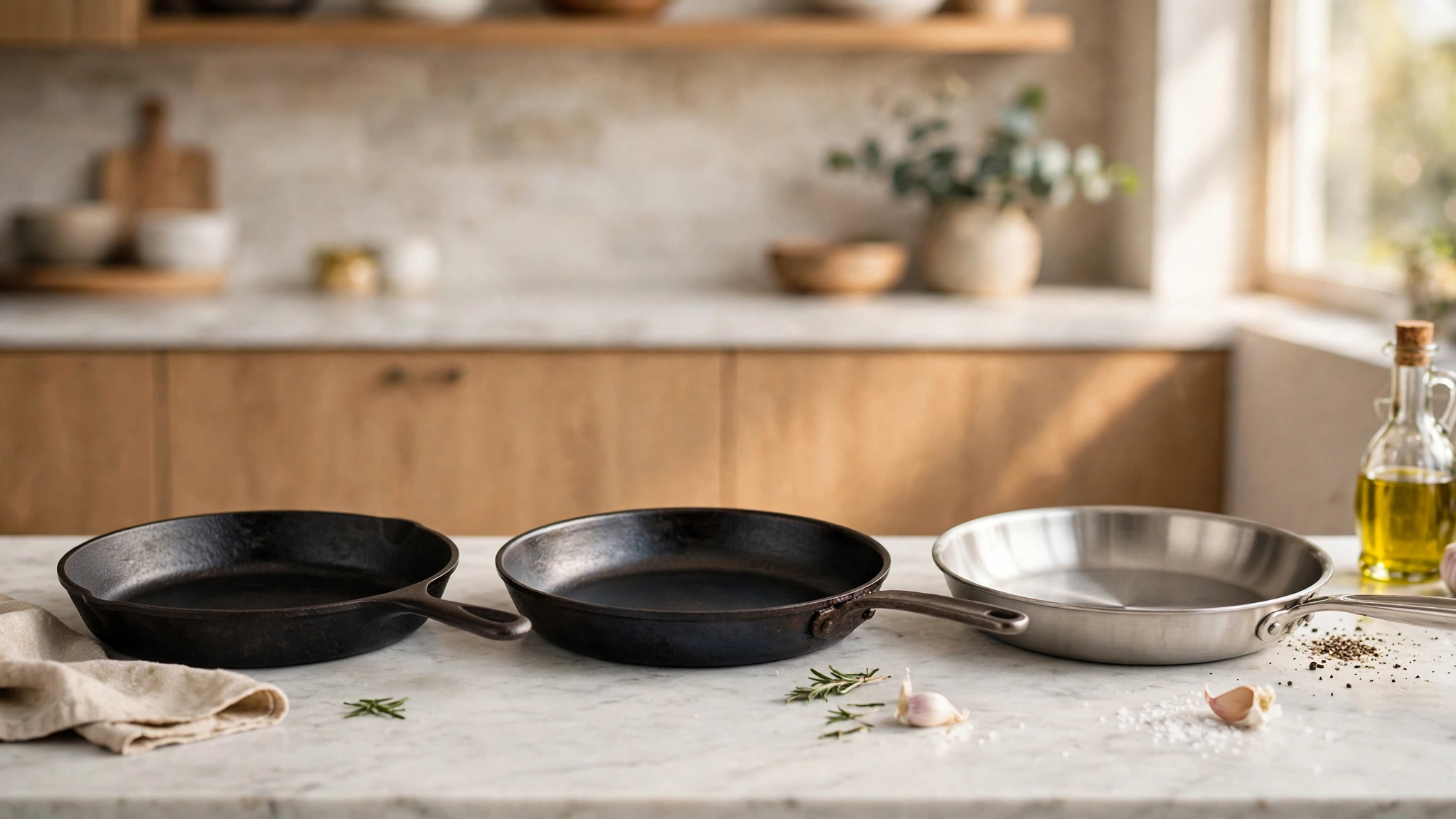
Choosing a pan gets confusing because all three materials can brown food, but they behave differently once heat hits the cooking surface. Cast iron holds heat for a long time, carbon steel responds faster when you change the burner, and stainless steel is a versatile everyday option that does not need seasoning. None is the perfect pan for every meal.
The right choice depends on what you cook, how much maintenance you are willing to do, and whether you want a pan that can move from stovetop to oven. Here is how each material performs, what it asks of you, and which one makes the most sense for common kitchen jobs.
Cast iron: steady heat and a naturally seasoned surface
Cast iron is thick and heavy. It takes time to heat, but once hot it holds onto that heat well. That makes it a strong choice for searing steaks, browning chicken, frying potatoes, and baking dishes such as cornbread. When you add a cold piece of food, the pan’s temperature usually drops less than it would in a thin pan.
Most bare cast-iron pans develop a seasoned surface. Seasoning is a thin layer of polymerized oil that helps protect the iron and makes the surface easier to cook on. It is not a permanent nonstick coating, and it improves with regular use and sensible care.
Where cast iron can frustrate you
Weight is the first trade-off. A large skillet can be awkward to lift, pour from, or wash, especially when full. Cast iron also heats slowly and does not react quickly when you turn the burner down. If you are cooking delicate fish or a sauce that needs precise temperature changes, that stored heat can work against you.
Bare cast iron can react with long-cooked acidic foods, particularly when the seasoning is thin or damaged. A quick tomato pan sauce is often fine in a well-seasoned skillet, but a long simmer in a new or poorly seasoned pan can pick up a metallic taste and wear at the seasoning. Enamel-coated cast iron avoids the seasoning routine, but it costs more and the enamel can chip if handled roughly.
Carbon steel: lighter, quicker, and popular with line cooks
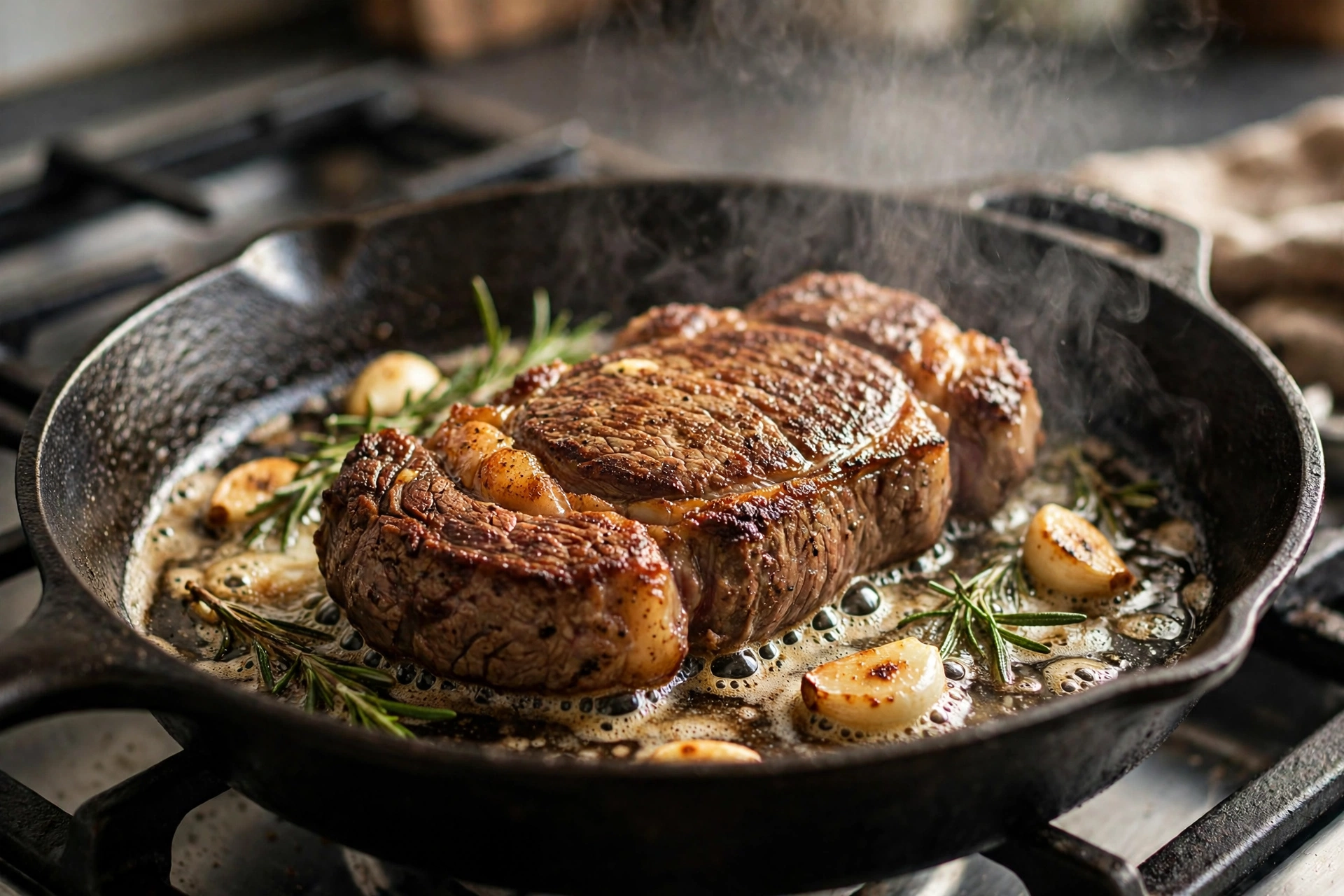
Carbon steel shares some traits with cast iron. It is usually made from a thinner sheet of iron-rich steel, so it is lighter and responds to heat changes more quickly. A well-seasoned carbon-steel pan can develop a dark, slick surface that works well for eggs, pancakes, sautéed vegetables, and seared meat.
Its shape makes a difference. Carbon-steel frying pans often have sloped sides that make it easier to toss food, while a carbon-steel wok uses a different shape and heat pattern for stir-frying. The pan can be a good fit if you like to move food around as it cooks.
Carbon steel needs a little attention
Like bare cast iron, carbon steel usually needs seasoning. New pans may arrive with a protective coating that you must remove according to the maker’s instructions before cooking. The surface can look patchy or change colour as seasoning builds. That is normal; a pan does not need a perfectly even black finish to work well.
Dry the pan after washing and apply a very thin film of cooking oil if the instructions call for it. Leaving water on the surface can cause rust. Avoid soaking it for long periods or putting it in the dishwasher. Strongly acidic foods can also strip seasoning, so use stainless steel for long tomato, wine, or vinegar-based sauces.
Stainless steel: the flexible, low-maintenance workhorse
Stainless steel is the easiest of the three to maintain. It does not need seasoning, handles acidic ingredients, and can be scrubbed more firmly than a seasoned pan. It is a dependable choice for pan sauces, vegetables, chicken, fish, and everyday cooking.
Many good stainless pans use a layered construction. A core of aluminium or copper spreads heat through the base, and sometimes up the sides, while stainless steel forms the cooking surface. This construction helps avoid the uneven hot spots found in very thin pans. A thick, fully clad pan generally heats more evenly than a low-cost pan with only a thin base plate.
Why food sticks to stainless steel
Stainless steel is not nonstick. Protein-rich food can bond to the surface if the pan is too cool, too hot, or crowded. Preheat the pan over moderate heat, add oil, and give the food time to form a crust before trying to move it. When a piece of chicken or fish is ready to turn, it often releases more easily.
Do not treat the water-droplet test as a reason to heat an empty pan until it is smoking. Very high heat can damage oil and make food burn. Moderate preheating is enough for most meals, and you can adjust once you understand how quickly your pan responds.
Quick comparison: which pan suits which job?
| Cooking job | Best starting point | Why |
|---|---|---|
| Thick steak sear | Cast iron | Holds heat well when cold meat goes in. |
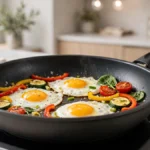
| Eggs and pancakes | Seasoned carbon steel | Light enough to handle and can develop a slick surface. |
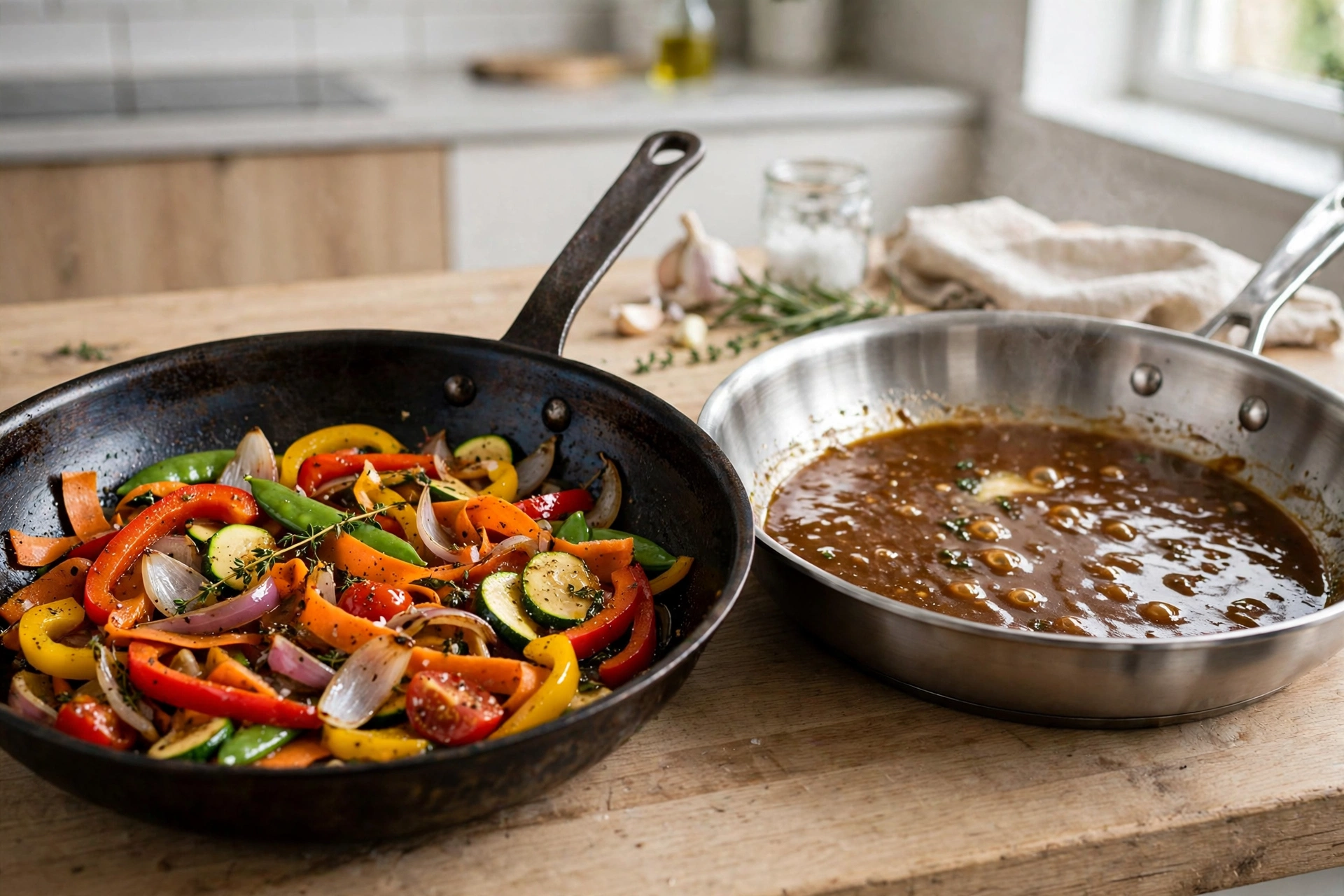
| Tomato or wine sauce | Stainless steel | Handles acidic ingredients without seasoning concerns. |
| Pan sauce after searing | Stainless steel | Fond releases into liquid and the pan is easy to deglaze. |
| Oven-baked skillet meal | Cast iron | Retains heat and many bare pans tolerate high oven temperatures. |
| Fast vegetable sauté | Carbon steel or stainless | Both respond faster than heavy cast iron. |
Heat response and cooking control
Cast iron has high heat retention but slow response. Carbon steel is thinner, so it usually heats and cools faster. Stainless steel varies widely depending on construction: a thin pan can heat quickly but develop hot spots, while a heavy multi-ply pan spreads heat more evenly and takes longer to change temperature.
Think about the burner you use. On a small burner, a large pan may heat unevenly no matter what material it is made from. Match the pan’s base to the burner size, preheat gradually, and avoid heating an empty pan on maximum power. This is especially useful with induction, where compatible pans can heat very quickly.
Cleaning and care: what each material asks of you
Cast iron: Wash with warm water and a brush or sponge. A little dish soap is generally fine for modern seasoning, but avoid leaving the pan wet. Dry it thoroughly and maintain the seasoning with a very thin coat of oil when needed. If rust appears, scrub it away and re-season according to a reliable method.
Carbon steel: Clean while the pan is still warm but not dangerously hot. Remove stuck food, rinse, dry completely, and apply a light oil film if appropriate. Do not let it sit in a sink full of water. If the surface looks dull after acidic food, rebuild the seasoning with a thin layer of oil and controlled heat.
Stainless steel: Wash with dish soap and water. For stuck-on food, add water and simmer briefly to loosen it, then use a non-scratch scrubber. A stainless cleaner can remove rainbow heat tint or stubborn marks. Avoid thermal shock, such as pouring cold water into a very hot pan, because it can warp the metal.
What about price and lifespan?
All three materials can last for years when made well and treated properly. A basic cast-iron skillet can be inexpensive and is often easy to restore. Carbon steel prices range from simple restaurant-style pans to premium cookware with polished finishes. Stainless steel has a wide price range, and construction is usually more important than a fancy finish or brand name.
When comparing stainless pans, check whether the sides are clad or only the base is bonded. Look at handle attachment, oven-safe temperature, lid fit, and warranty. For cast iron and carbon steel, inspect the handle, flatness, and overall weight. A pan that is too heavy or awkward is less likely to become a daily favourite.
Do you need all three?
No. If you want one pan to start with, stainless steel is the most flexible choice for a wide range of ingredients and cooking styles. Choose cast iron if you often sear, fry, or bake in a skillet and do not mind the weight. Choose carbon steel if you want a lighter seasoned pan and enjoy cooking at fairly high heat.
A practical two-pan setup is often enough: a stainless-steel skillet for acidic foods, pan sauces, and general cooking, plus either cast iron or carbon steel for high-heat searing and foods that benefit from a seasoned surface. Add another pan only when you can name a job the first two do poorly.
Pan picker: choose by the way you cook
Which pan should you reach for?
Open the cooking task closest to what you make most often.
I want a hard sear and strong heat retention
Start with cast iron. Choose carbon steel if you want a lighter pan that still works well for searing.
I cook eggs, pancakes, and quick sautés
A seasoned carbon-steel pan is a good fit if you are comfortable drying and maintaining it.
I make tomato sauces and pan sauces
Choose stainless steel. It handles acidic ingredients and makes deglazing easy.
I want the least maintenance
Choose stainless steel. It does not need seasoning and is simple to wash.
A pan that feels comfortable in your hand and suits your burner is more useful than a premium pan you avoid using.
The bottom line
Cast iron, carbon steel, and stainless steel are not rival versions of the same pan. Cast iron gives you stored heat, carbon steel gives you a lighter seasoned surface with quicker response, and stainless steel offers broad ingredient compatibility with less upkeep. Choose based on the meals you cook most, not on claims that one material is always superior. If you choose cast iron, our cast-iron restoration guide explains how to care for a worn pan.
Heat Management: How to Use Each Pan Well
Cast iron and carbon steel usually benefit from gradual preheating rather than being placed over maximum heat immediately. Their stored heat can be useful for searing, but a burner set too high can create a hot center and uneven cooking. Stainless steel also benefits from controlled preheating, but the right temperature depends on the food and cooking fat. A drop of water test is not a universal guarantee and can be misleading on some cooktops; use recipe cues and moderate heat while learning a pan.
For eggs and delicate foods, a seasoned cast-iron or carbon-steel surface may release well when it is properly maintained and used with suitable heat and fat. Stainless steel can also cook delicate foods, but technique matters: dry the food, preheat appropriately, use enough fat, and allow the food to release before forcing it. None of the materials is inherently nonstick in every situation.
Compatibility and Care Checks
- Check whether the pan works on induction; a magnetic base is required.
- Confirm the handle’s oven-safe temperature and whether it has wood, silicone, or other heat-sensitive parts.
- Avoid sudden temperature changes that can warp or crack cookware.
- Use the maker’s cleaning instructions for enameled cast iron; do not treat enamel like bare seasoned iron.
- Dry bare cast iron and carbon steel promptly and maintain the seasoning with a thin film of oil.
There is no need to own all three materials. Choose one pan that suits your most common meals, then add another only when you can name a cooking job your first pan handles poorly.
Manufacturer and safety references
These authoritative resources support the care, safety, or product-information points discussed above. Always follow the current instructions for your exact model.
How this guide was researched
This guide compares products using manufacturer product information, published specifications, available manuals, compatibility and warranty details, and the features that matter for the intended use. Where useful, available owner feedback and independent coverage provide additional context. Product details can vary by model and generation, so confirm the exact version, included accessories, and current manufacturer guidance before buying.

Leave a Reply