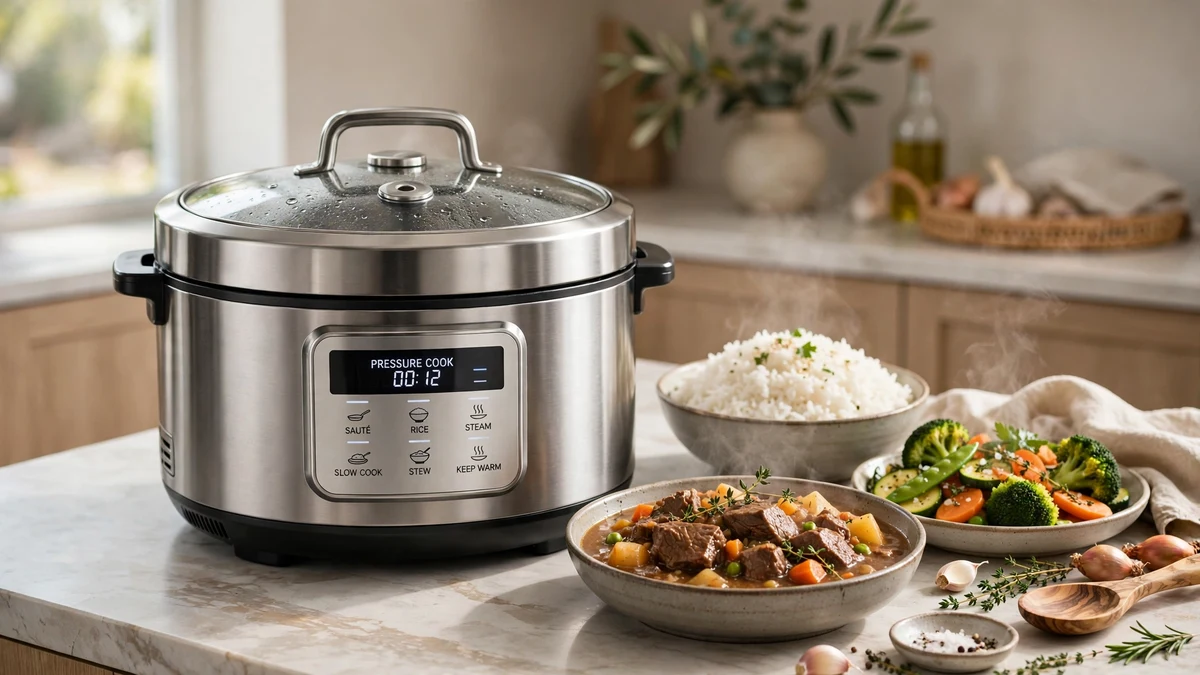
“Multi-cooker” can describe two quite different appliances. Some are built around pressure cooking and can shorten the time needed for beans, stews and tough cuts. Others focus on slow cooking, searing, steaming and braising. Ninja and Instant Pot sell several types, so the model name matters more than the logo.
This guide compares five options by the jobs they do best. It is based on published specifications and review coverage, not KitchFinds hands-on testing. Check the exact model, included accessories and manual before buying.
The important distinction: does it pressure cook?
Instant Pot’s best-known multi-cookers are pressure cookers with additional functions such as sauté, slow cook, steam and keep warm. Ninja also sells pressure-cooking Foodi models, but not every Ninja multi-cooker includes pressure. The PossibleCooker Pro, for example, is designed for slow cooking, searing, steaming, braising and baking rather than pressure cooking.
Pressure cooking is useful for dried beans, grains, soups and tough cuts when you want to reduce cooking time. It requires following the sealing, venting and minimum-liquid instructions. A slow cooker is simpler for long unattended cooking but will not deliver the same pressure-cooking speed.
Five multi-cookers worth comparing
5. Instant Pot Duo Plus 6-Qt — straightforward pressure cooking

- 9 Cooking Functions: Pressure cook, slow cook, sauté, sous vide…
- Customizable Smart Programs: Tackle every recipe with…

The Duo Plus is a straightforward 6-quart electric pressure cooker with a broader set of cooking programs, including pressure cooking, sautéing, steaming and slow cooking. It is a sensible replacement for shoppers who wanted the discontinued CPC-600’s basic pressure-cooking role. Check the exact generation and included accessories before ordering.
- Upside: Pressure, sauté, steam and slow-cook modes cover several everyday jobs in one 6-quart pot.
- Another plus: The familiar pressure-cooker format makes it a practical all-rounder without adding a separate crisping lid.
- One drawback: The range of programs and pressure-release steps still takes some learning, especially for first-time users.
- Best match: Home cooks who regularly make beans, grains, soups and one-pot meals and want a straightforward pressure cooker.
4. Crock-Pot Express 6-Qt — current pressure-cooking model
- Oval Shaped Pot: Easily fits large cuts of meat and allows for…
- One-Hand Easy-Fit Lid: Align the lid without having to twist…
The Express line brings pressure cooking to a brand many households already associate with slow cookers. It can suit chili, pulled meat and one-pot dinners. Control layouts and included accessories vary, so inspect the listing carefully. Learn the sealing and pressure-release process before the first recipe, and check the fill limits for foods that foam or expand. If you rarely pressure cook, a dedicated slow cooker may be all you need.
- Upside: Adds pressure cooking to the slow-cooker style many households already know.
- Another plus: The 6-quart format suits family dinners such as chili, pulled meat and stews.
- One drawback: Its controls and included accessories can vary by version, so the exact listing needs checking before purchase.
- Best match: Cooks who want both pressure and slow cooking for family-size one-pot meals.
3. Breville Fast Slow Go — for cooks who want more control

- MULTI COOKER: can be used as a Slow Cooker, Pressure Cooker, Rice…
- 14 SETTINGS: soup, Stock, Meat, Stew, Steam, Sauté, Legumes…
The Fast Slow Go is the available Breville alternative for cooks who want pressure and slow cooking with adjustable settings. It is the successor option to compare if the Fast Slow Pro is unavailable in the US. More control also means more settings to learn, so check the exact program list, capacity and included accessories.
- Upside: Combines pressure and slow cooking with adjustable settings for more control over the process.
- Another plus: Its range of settings gives cooks room to tailor different recipes rather than relying only on preset programs.
- One drawback: The extra controls can make setup and everyday operation less intuitive than a simpler cooker.
- Best match: Confident home cooks who like adjusting settings and want pressure- and slow-cooking in one appliance.
2. Instant Pot Duo Crisp Ultimate Lid 13-in-1, 6.5-Qt — pressure cooking plus crisping

- 13 Cooking Functions: Pressure cook, air fry, slow cook, steam…
- The Best of Both Worlds: One lid switches effortlessly between…
The Duo Crisp Ultimate Lid combines pressure cooking and air frying in a single lid, so there is no need to swap between separate pressure-cooking and crisping lids. This 13-in-1, 6.5-quart model also adds functions such as sous vide, proofing and dehydrating. It is a versatile option if you want one appliance for pressure-cooked meals and crisp finishes, but check the included accessories and exact listing variant before ordering.
- Upside: Combines pressure cooking and air frying in one appliance without swapping separate lids.
- Another plus: Its 13-in-1 functions and 6.5-quart capacity cover a broad mix of meal preparation and finishing tasks.
- One drawback: The multi-part design takes more storage and cleanup effort than a basic pressure cooker.
- Best match: People who want pressure-cooked meals and crisp finishes but have room for a larger countertop appliance.
1. Ninja Foodi PossibleCooker Pro MC1001 — best for broad one-pot cooking

- 11-IN-1 FUNCTIONS: Slow Cook, Sear/Sauté, Bake, Braise, Proof…
The PossibleCooker Pro is a large countertop pot with functions such as slow cook, sear/sauté, steam, braise, bake, proof and keep warm. Its 8.5-quart capacity is useful for batch cooking and entertaining, and the removable pot can be used for oven finishing within the maker’s limits. Important: this model is not a pressure cooker. If fast pressure cooking is your priority, choose a pressure-cooker model instead.
- Upside: The 8.5-quart pot handles larger batches, entertaining and family-size meals.
- Another plus: Slow cooking, searing, steaming, braising and baking make it useful beyond one cooking method.
- One drawback: It does not pressure cook, so it will disappoint anyone buying it mainly to speed up beans or stews.
- Best match: Batch cooks and hosts who prefer slow cooking, searing and braising in one large pot.
How Ninja and Instant Pot differ in daily use
Pressure cooking: Instant Pot has a broad range of pressure-cooker models. Ninja also offers pressure-and-crisp Foodi cookers, but its range includes non-pressure multi-cookers too. Read the specific feature list.
Crisping: A combination pressure cooker and air fryer can save space compared with two appliances, but it may be larger and more involved to store. If you already own a good air fryer, the extra lid may add little value.
Slow cooking and searing: The PossibleCooker is designed around this style. Searing and slow-cooking in one pot can reduce dishes, but it is not a replacement for pressure cooking.
Counter space: Measure the appliance with lids open and allow space for steam release. Think about where the accessories will live; otherwise, a multi-function device can create cabinet clutter.
Which one should you choose?
Choose an Instant Pot-style pressure cooker if beans, grains and stews are regular meals. Choose a Ninja Foodi pressure-and-crisp model if you want both functions in one appliance. Choose the PossibleCooker Pro if your routine is built around slow cooking, searing, braising and large batch meals. Breville suits cooks who value setting control; Instant Pot Duo Plus and Crock-Pot Express are more focused pressure-cooker options.
Quick decision helper
Choose the description that sounds most like your kitchen. Open it to see the matching recommendation.
Pressure cooking for beans and stews
Start with an Instant Pot pressure-cooker model.
Pressure cook and crisp
Compare the Instant Pot Duo Crisp Ultimate Lid or a Ninja Foodi pressure-and-crisp model.
Slow cook, sear and braise
The Ninja PossibleCooker Pro is designed around these jobs, not pressure cooking.
More control over settings
Compare the Breville Fast Slow Go.
Simple pressure cooker
Consider the Instant Pot Duo Plus or Crock-Pot Express.
Safety and maintenance checklist
- Read pressure-release and minimum-liquid instructions first.
- Inspect the sealing ring and valve regularly.
- Do not exceed fill limits, especially with foaming foods.
- Keep steam vents clear and away from hands and cabinets.
- Check which parts are dishwasher-safe on your exact model.
Affiliate disclosure: KitchFinds may earn a commission from qualifying purchases through links in this article.
What multi-cooker capacity is practical?
Capacity labels can be misleading because the full volume is not the same as the safe working volume. Pressure cookers need headroom, particularly for foods that expand or foam. A large pot can be helpful for batch cooking, but it may be less efficient for a small meal and will take more cabinet space. Think about the number of people you usually cook for, whether you meal-prep, and whether you want leftovers.
For a couple making one-pot meals, a mid-size pressure cooker may be easier to store and clean. Families and batch cooks may appreciate a larger vessel. If you regularly cook whole cuts of meat or large quantities of soup, measure the food you normally prepare rather than buying on capacity alone.
Pressure release is part of the cooking process
Natural release allows pressure to fall gradually after the cooker stops heating. Quick release vents steam more rapidly. Recipes choose one or the other for a reason: a natural release can help some meats stay tender, while quick release can prevent vegetables from overcooking. Follow the recipe and the appliance manual, keep hands and face away from the steam path, and never force the lid open while the cooker is pressurized.
Foaming foods such as beans, grains and some soups need particular care. Respect the fill lines and any reduced maximum level printed in the manual. Clean the valve and sealing components as directed so food residue does not interfere with operation.
When a dedicated appliance is the better buy
Multi-functionality sounds efficient, but an appliance earns its space only when you use its features. If you already own a reliable slow cooker and air fryer, a large combo device may duplicate jobs you can already do. If you mainly make rice, a dedicated rice cooker can be simpler. If you mostly cook soups and beans quickly, a straightforward pressure cooker may be the most useful choice.
Consider how often you will use each mode, how many accessories must be stored and how easy it is to wash the lid. A model with many functions is not automatically more convenient if switching lids or finding the right insert becomes a chore.
Think about the cleanup, not just the cooking modes
Multi-cookers often have more parts than a basic pot: sealing rings, pressure lids, crisping lids, racks, condensation collectors and inner pots. Those parts need a storage spot and a cleaning routine. If the lid has a valve or gasket, follow the manual for removing and washing it. Food residue around the sealing area can affect performance, while trapped moisture can create odors if the appliance is put away wet.
Before buying, look up the replacement cost and availability of the sealing ring and other wear parts. A model with a useful set of functions is less useful if a small accessory becomes difficult to source. A removable inner pot with a durable finish also matters because it is the part you will handle most often.
Check compatibility with your recipes
Some multi-cookers have limits on dairy, thick sauces or foods that expand under pressure. A recipe written for a stovetop pressure cooker may need adjustments for an electric model, particularly around liquid quantity and release timing. Start with recipes written for your exact appliance, then adapt familiar dishes once you understand how it behaves. That learning curve is part of the real cost of switching to a multi-cooker.


Leave a Reply